

The overarching theme of all these readings, I feel, can be summed up in five words: information needs are always evolving. From Janes and Taylor discussing how the future holds two possible outcomes for the information profession to O’Brien and Greyson’s discussion on information needs as a whole, the flexibility of information needs was paramount. For O’Brien and Greyson, their main point was that information needs change and that information seekers have various reasons behind why they search for answers in the way that they do. I think the most important idea to come from their entire chapter is that information seeking is not always the response to information needs. Yet, it is just as important that they state that needs cannot be observed while actions can, as they proposed research approaches to help bridge the gap for the people who do not information seek for their needs (O’Briend and Greyson in Hirsh). Their brief discussion about context forming needs also speaks to the way that people seek information, as the context that formed the need may also be the context keeping a person from responding with information seeking behavior.
Simmons follows the discussion of information needs with the logical next step: finding information. I enjoyed that she was clear in stating, regardless of the interface, mediations for information to seeker should always have the following characteristics: quality service, knowledgeable process, and user education. These three qualities have been discussed at length in lecture and indirectly through our other readings, but having them laid out as the pillars of information intermediation made the ideas much more concrete. The varying types of reference that have developed as the information profession has changed has also been interesting. I think the most interesting concept I saw here was “Librarian with a Latte,” as I find that this would be an odd interaction for most. While I am much more likely to make an appointment with a reference librarian, I understand the appeal of placing a librarian on a campus coffee shop might have for some. It was also nice to see that embedded librarians were discussed, because I know it has been much easier to speak with Shevon knowing that she has knowledge of our particular program and can help me navigate information from that perspective. The emphasis of convenience and scalability, I feel, may be the take-aways from this chapter, as I have seen both discussed over and over in the research of trying to highlight the importance of libraries in the university structure.
Janes and Taylor both attacked the issue regarding the “future of reference” (Janes, 21). While both agreed that there are two outcomes as the reference world changes, revolutionary and evolutionary, both focused on the evolutionary path (Taylor, 179). Janes provided an overview of what reference is, for, and how information professionals will always have an edge on the rest of the population in this particular field. Janes seemed to conclude that while ready reference’s importance may deplete as more 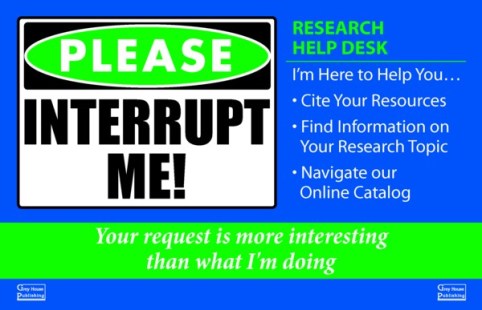 information is available at a user’s “finger tips,” there are services that reference librarians will always be better at and that those skills should be the focus, moving forward, as they will never be in short supply (Janes, 25). Taylor’s approach addressed the current situation of the reference librarian and how it may develop as the profession moves forward with changes. Like Simmons, Taylor addresses the reference librarian as information intermediator, discussing the formulation of a query and search (visceral à conscious à formalize à compromised) to the importance of the reference librarian’s knowledge of the process (user terminology à system terminology), and how a library packages such services to appeal to the user (wholesaler vs. retailer).
Kuhlthau addressed the search process instead of the information professional, providing several helpful models to make the process more visual to those that do not understand the most common steps. The Search Process, according to Kuhlthau, appears in 6 stages that have varying feelings and actions attached to them: Task Initiation, Topic Choice, Exploration (General à Focused), Focus Formulation, Focus Information Collection, and Conclusion of Search (Kuhlthau, 38-40). Decision points throughout this process are determined by personal interest, assignment requirements, available information, and time allotment (Kuhlthau, 42). Kuhlthau’s major findings and problems are what draw the most interest though. Throughout her research, she seems confident in concluding that this process does meet the same criteria of the constructionism process, which she set out to prove, but that understanding and actual experience differ for the user and that librarians are only seen as source locators instead of additional points of reference.
I feel that these readings pulled some ideas that have been touched on into greater focus to me. While I had these general understandings of information needs, the search process, and the evolution of the information profession, these articles provided more concrete understandings. The connections I was capable of making to the real world throughout these readings was also important as well. While I was amused by the different types of references Simmons discussed, they stuck with me more because I could relate Shevon to such innovations. In reading Taylor, he quoted a librarian from one of his interviews, stating, “If you don’t interrupt me, I don’t have a job,” in response to a patron apologizing for making a query (Taylor, 180). This brought me back to my former university’s library that post signs on their computers encouraging patrons to interrupt them. Actually, it made me think about how I found it odd that the same thing does not seem to be a trend in the University of Michigan’s library system.

 Raven K
I too was especially taken by the quote from the librarian in Taylor’s study on interruption. It’s so interesting that this fear of approach is still such an issue to many library patrons – I understand it as even I experienced that discomfort in some of my unobtrusive observations. It seems it all comes down to attitude.
I love that your university used those “Please Interrupt Me” signs! I think those could be great to incorporate into my own work in the future. I know the librarian with a latte idea sounds different, but it does seem like one ingenious approach to bypass the sense of unapproachability of librarians behind a desk. Do you think patrons would warm up to the approach or that it might be too unexpected or in the wrong area to best assist with user needs?
LikeLike