[Title taken from the name of Roswell Season 3, Episode 12, (2001)]
While there are so many different kinds of tips out there, I have been thinking about my previous travel experience and how that compares to the things I have come across in my short time here so far. Of course, every country, people, and culture is different, but there are always things that need to be kept in mind when you travel, especially when it comes to the similarities of a place. I noticed I was making a lot of notes about these things and decided to elaborate a little on some of my thoughts. These come from things I experienced in Ukraine and Poland (5 years ago) and things I have experienced here in Czechia.
Walking the Streets
The streets of most European cities are not pavement or concrete as you may be used to in the United States. In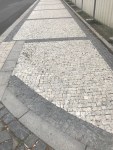 many places they are even cobblestone-esquire or other types of bricks (sometimes looking like marble) that are put together. While beautiful and one of the many things contributing to the reasons I love Europe, the streets can be murder on your feet. It’s not just enough to have good walking shoes (which you definitely should have for any kind of travel) but to be aware that that may not be enough. I have not yet come up with a way to negate some of the impact my legs take daily, but it is often something people don’t consider when traveling. Due to the way that these types of streets are cobbled together, time often leaves them uneven or even partially missing, so always pay attention to where you are walking.
Language Knowledge
Having any type of knowledge of the language is helpful no matter where you are. Even in high-traffic tourist  areas where the majority of people may be speaking English, street signs are still in the language of the country you are in, but it’s not just that. In most countries, even if your language knowledge is limited and broken, people appreciated the effort. In my previous experience, I got by with “yes,” “no,” and “thank you.” My goal on this trip is to be able to make it through restaurant interactions in Czech. I, of course, decided to spend my summer in a country where the local language is extremely difficult to learn. The universities affiliated with the library I am working at are large international institutions, so many people here speak English (which seems to be the universal academic language), but once you remove yourself from that, you are dealing with natives on their home turf. Respect them enough to at least try to communicate in their language. Many people in Praha at large speak a little English, but not everyone.
Tipping
In the United States, tipping is essential in the service industry, as waiter often do not make anywhere near a  living wage. The accepted form of tipping in the U.S. is 20%, though I often tip up to 30-35% depending on my service. There is a very different culture in Europe when it comes to tipping. In some cultures, it can be insulting to tip (Ukraine) or they are just now coming around to the idea of tipping wait staff (Poland). *Of course, I have not been to either country in 5 years, so this may be different now.* While tipping has become an expectation in Czechia, the accepted tipping amount is only 10-15% and often comes with suggested amounts on the ticket telling you that “service is not included”. From some of my Czech colleagues, I have been told that the 10% is really the expectations, but that some of the older generation just “rounds up” even if it is only 1 or 2czk due to their experience throughout their years. Just be sure to look into these types of things before you travel. If you have contacts in other countries or are traveling for business or school and know people that have experience in the culture, be sure to ask so that you can tip (or not tip) properly.
Connections
I think it goes without saying that making connections is a really important way to truly experience life. Especially if you are traveling for the long term, try to make connections where you can. My mentor has been very keen to make sure I have a semblance of a social network while I am here in Czechia. This network for me will turn out to be very international, but these types of connections have already helped me experience so much here. International transplants are also a really great way to make sure you see all the essentials while you are somewhere.Though, try to make connections with locals as well. Some of my colleagues can inform me of the things I need to do as a foreigner, but my Czech colleagues will round out my experience with their understanding of their country. Just some of the conversations I have been able to have about world views or just Czechia in general have been helpful to understanding the motivations of some to choose to stay here or study here. Of course, with more short-term travel this can be much more difficult to do.
Public Transportation
Public transportation can be a scary thing no matter what country you are in. In my previous excursions out of the 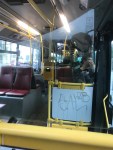 United States, I have avoided it when possible, unless I had someone with me. In Praha, it is a necessity for most people. If you have never experienced European driving, your first trip on public transit can definitely throw you for a loop. I am more experienced with the buses here in Praha and their speed and paths can be quite concerning at times. Don’t be alarmed, these people do this for a living.
If you are going to be spending any amount of time in a city like Praha, invest in a transportation pass. This is the land of ticketing police, so be sure you know what you have purchased and what it applies to. For my summer, I went ahead and got a 90-day pass which covers all public transportation here in the city. This allows me to take any bus, tram, or metro I need. While I plan on walking as often as I can, the option is nice to have, especially because the city is so large and not everything is easily walked to. The main purpose for getting my pass was for the bus to work. Transit, like most things in the city, are relatively cheap. My pass was 1500czk which equates to approximately $70 (U.S).
Some people risk not getting a pass, which is a gamble. I am not sure on the metros, but there is not regular surveillance on the trams and buses. I had been here almost a full week before I came into contact with ticketers. Don’t take the chance though. If you are caught without a ticket, as I witnessed one student deal with this morning, you are removed from the bus at the next stop after receiving a 35000czk ticket, which is approximately a $1590 (U.S.) fine. Just invest in the cheaper pass. There are all sorts of ones available (single use, 1-day, 3-day, 2-week, 90-day, etc.) and they can be purchased at a variety of locations (metro stops, airport, train station, on the transportation).
Public Toilets
There is a trend worldwide to limit access to washrooms. In Europe and many places throughout the world, there is a history of a fee to use public washrooms (often marked WC on signs). Public washrooms are also not common even in high-traffic, tourist areas. Restaurants will actually place signs on their windows stating that they have them, often for no fee other than being a customer. Keep this in mind when you are about. Keeping a few pieces of change is always helpful for situations where you cannot find a free washroom. In the U.S., the trend has become more popular as well, but we are just eliminating public access washrooms altogether, instead of charging for them.
That being said, if you are staying somewhere with a shared communal washroom (dormitory or hostel, for example), you may come across some new and interesting situations. If you are from the U.S., be aware that we have a very conservative outlook on sexuality and the acceptability of nudity in our country. I had friends in Ukraine that came back from an experience at a spa/gym almost traumatized because people are not shy about what they expose. For me, I am living in dorm-style living and our communal washroom on our co-ed floor is that, co-ed. At any point in time, men are using the restroom while women are showering and vice-a-versa. Is this a problem? No, people try to give a wide-berth. In my particular living situation, there are sinks and showers on one side and urinals and stalls on another, separated by a short hallway and doors. If the door to the shower room is closed, it seems that caution is taken. If someone needs to use the sinks, they either come back a bit later or come in, take care of things, leave, and close the door back. It was not something that I expected, but it’s definitely something that wasn’t hard to get used to.
Dressing
One of the best reasons to do some research before you travel is to discover what is acceptable dress in the country you are going to. Some European countries are extremely conservative when it comes to the way people publicly dress. In Ukraine, it is not uncommon to be yelled at or given dirty glances if a woman decides to show her shoulders. Many countries are much more liberal though and this bleeds into not only public dress but work attired. Here in Czechia, wearing a shirt and jeans to work is perfectly acceptable. If you are a person that doens’t like to be picked out of the crowd as a “tourist” or an “American,” then knowing how to dress is important. This also goes into looking into the climate of an area. Even here in May there is a bit of a chill to the air because of how far north Czechia sits, but, also due to where we are, it is light outside most hours of the day. The chill will fall away as the summer gets closer, but keeping long sleeves on hand is essential for me to stay comfortable right now. It also doesn’t seem to rain here very often, but I was thankful to keep an eye on the forecast, or I’d have made it back to my room looking like a drowned dog last night.
Dogs
I did not come across many dogs in Ukraine or Poland, but they seem to be a common thing here in Czechia, but  they aren’t regarded in the same way here as they are in the United States, it seems. The dogs you see just roaming around are often not street dogs, but it may not always be clear who they belong to. They seem to be very well-trained here and you will definitely see them on public transportation. In parks, dogs can go unleashed and you even see this in the regular city streets. On buses, trams, and the metro, dogs must be muzzled, but, as they are from a young age, this does not seem to be an issue. In all honesty, it is not biting that seems to be the reason for this regulation (which is often the reason for muzzling in the United States) but so dogs do not bark and disturb transit users.
Water
Some cultures do not drink tap water. This sometimes comes from a long history of not having clean water and other times it is because they do not have clean water, or reliably clean water. Again, look into this before you go somewhere. Sometimes it’s just better to buy your water anyway and cover your bases. Due to the previously mentioned lack of public toilets, there is also a lack of public water fountains and such, so, for a travel day, buying large bottles of water (1.5L is my preference) may be a better option. On days that I know I am just exploring, I usually take two and that’s enough to keep me hydrated. You will often find water to be more expensive at restaurants than other items, like beer, due to this bottled issue. Keep this in mind. The drinking culture in most of Europe is social though, so having a beer at lunch is not necessarily an odd thing, just like long lunches in general, but, if it’s a hydration issue, pay the little bit extra, as beer will further dehydrate you.
Smoking
If you are not a smoker, you will be in the minority throughout most of Europe. Like drinking, it is just part of their social culture. Now, this does not mean that it is overbearing. On the contrary, I am much more aware of smokers in the United States than I ever have been in Europe. That being said, it is probably the most noticeable at restaurants, where people will often sit and smoke on terraces while having drinks with their friends. Don’t let that discourage you from sitting outside though. There are few things nicer than sitting on a terrace having a good beer after a long day and looking up to see the beautiful streets of Europe.
If I come across another set of things I find myself thinking of, I may post something else on these travel difference between the U.S. and my experiences in Europe. Of course, any other comments would be helpful!

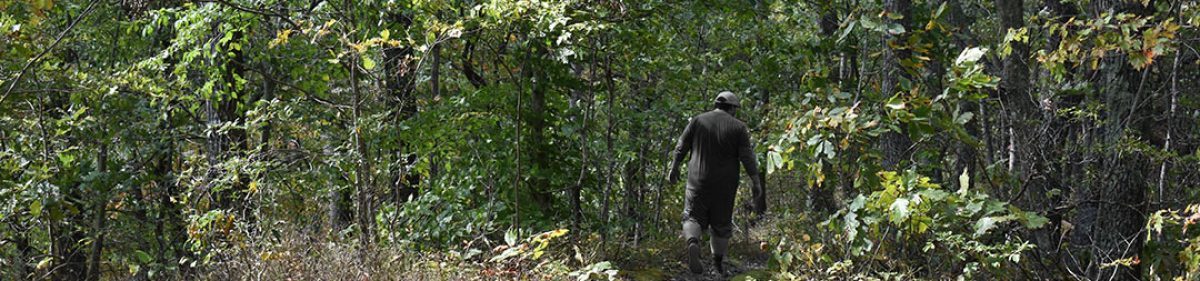
 An impromptu trip is always fun, but an impromptu trip to another country is just fantastic. Having a friend from the UMSI network here in Prague, I was asked if I would like to travel with her on her one free weekend in the country. Our destination? Dresden, Germany. I had never been to Germany, it was a 1100czk round-trip ticket, and it was only about 2 hours away, so I really couldn’t pass up the opportunity. My mentor did her doctoral work in Germany, so she sketched out a quick guide about some of the key places, but we went without a plan to just enjoy the city.
 Czech and German villages lined with beautiful forests and rock formations. Some places hold great churches and old castles. Upon arrival, we just dove into the city. We essentially took up the idea of finding cool looking tops to buildings and attempting to find them. This actually led us to finding most of the suggested locations made by my mentor.
 Once we got to Bruhl Terrace and had taken pictures of the Royal Palace, the Hofkirche, and the Opera House, we crossed the Augustus Bridge to look on the Dresden skyline from across the Elbe. We found a biergarten, grabbed a German brew, and just enjoyed some of our time. We then continued our journey, where we happenstanced upon Christopher Street Day celebrations (or Pride).
 but this was a pretty cool experience. It didn’t seem to be too over the top, which is how I think of many American celebrations of the even, and it was just a peaceful time of celebration. There were no open protesters and everyone genuinely just took in the good time. We joined the procession and followed the parade back to Bruhl Terrace, where it ended. People on the terrace just took in the celebration with everyone else. It was truly a unique experience that I am glad I got to be a part of.
 We finished our day in the city just taking in some of the modern. We grabbed food (and more German beer) before heading back toward the train station. Closer to the station, we checked out a mall and a local bookstore. Having not prepared an actual tour or looking into the city before we left, I picked up an English guide on the city for the train ride back. It was cool to learn about the places we had been while we sat on the train and to read about some the locations we didn’t make it to.
 morning, I dragged myself out of bed to go on a walk. I found the Lookout Tower (which I may come back to) and decided to spend my afternoon in the monastic beer garden. There I met an American military family who was visiting, which led to some great conversation. I then returned to the dorms for a call home and a nap before returning to the city for dinner. I pretty much spent most of the day eating, drinking beer, and reading, which, in my opinion, isn’t a half bad way to spend the day.
 comprehensive overview later on. The building the NTK currently resides in opened in 2009 and is bustling with students as this is the last week of classes before exams. I then had a quick sit-down with my mentor, as we have finally met in person after almost nine months of correspondence. The organized part of the day then got underway, with an English presentation course, lunch, conversation class, and an organizational overview of the library itself and how libraries in general throughout the Czech Republic function. There were hints at some of the projects I might be working on, but they did not want to overwhelm me. Now, that being said, I was definitely overwhelmed when I left early that afternoon, but I was also excited.
 established routine. Therefore, I am starting each day checking my agenda, emails, and items I didn’t get to the day before. Even after my first day, I still had things I hadn’t gotten to. Stephanie and I discussed some issues the library is trying to address when it comes to their students and she gave me some reading to give me some context on the European instead of the American approaches I am used to. Some of the other, smaller projects have provided me some work too. So, I went and overviewed everything after work on Monday and came in with questions this morning. I think this was helpful because, once Stephanie got in, she pulled me in to give me a managerial rundown and to discuss some of the projects I’m going to be getting into.
 Medical and Personal issues become your problem when it comes to your employees, so you need to know how to handle them so it doesn’t disrupt or make difficult anyone’s work, especially the employee involved. Long-term projects can lead to long-term relationships, so you need to be able to cultivate a good atmosphere with people. Project consultation can become a part of your job so that people on the project can get a fresh perspective (this seems to be what I will be doing in the CRM project).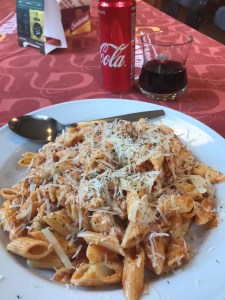
 endeavor was interrupted by Alexey, my Russian colleague, and his promise of coffee. Seriously, who would turn down a trip down to the first floor cafe to enjoy a cappuccino with fresh cinnamon? This was directly after being invited by Isabella, a Spanish colleague, to join her after work for a beer (she’s inviting her Czech colleagues). I like this mixing of cultures, because it has led to some interesting perspectives and ways of thinking on things that I had not considered. The prospect of not eating alone all the time is also quite nice.
 Much of my time in the office today has been at my desk, trying to garner the knowledge I am going to need to function well here and in a continued effort to get organized. Now, this does not mean that I haven’t been out and about. It is nice to have the freedom of getting up and moving about whenever I feel the need. Early this morning, I just took a walk about the library, just because I felt like it and I needed to get out of my chair. Then, I walked and discussed things with Alexey for a morning coffee. At 1300, I was supposed to take a tour of campus with Kyriaki, my Greek colleague. While we walked part of campus, we spent the better part of two hours having discussions about the world over coffee. I think I could get used to this kind of approach to work. At one point, I feel like I am not being productive, but at another point, I feel like I am getting so much from my experience.
 communities to standardize, in an ethical way, the ideas of integrity and fairness in research. While this is all well and good, how do we address issues that students don’t seem to grasp? Their lack of knowledge about academic integrity? Or plagiarism?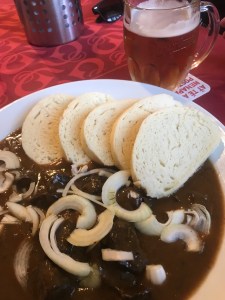
 was freeform, with only one afternoon meeting. My hopes here was to dig a little more into the readings that I have been suggested. I have an informal sit-down with Sasha soon, who is the director in the services portion of the NTK and co-manages services with my mentor. He has previous experience with the NTK, through his doctoral work, so he’s a great one to learn some history about the library prior to being re-affiliated with the universities here. The NTK was once the STK and housed where the National Library now resides. After looking at a beautiful videos (and not understanding a single word, as it is fully in Czech) and reading two papers Sasha has co-authored, I may begin to understand his reason for returning to the NTK and the place I can play here at the library.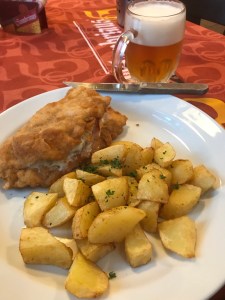
 actually like coming to work. Having the luxury of creating your own hours, when you actually like coming to work, is a nice to just get more. Now, I will have to restrain myself from my workaholic tendencies. Today I just have one meeting, regarding the CRM platform with the entire team, but I am, of course, still getting up to speed. I have a few readings I would definitely like to get through and then some paperwork I need to work on for the states.
 remedy this, I have been trying to find different places to do work and just get up and move around. I was actually running stairs earlier.
 goal for Sunday: don’t get lost. Seriously, though, no matter how you plan, if you don’t get
  lost in a city like this, even if it’s just for a moment, are you truly experiencing it? Have your markers (for me they are things like “the hill,” the river, and Old Town Square) and always head back to those if you get lost. One of the reasons I like walking everywhere instead of public transportation is that it’s easier to figure out where you are and retrace your steps.Here are a couple of thoughts from my Saturday adventures:(My main points of contact were Old Town Market and the Strahov Monastic Brewery)
 beautiful thing. I was wary of climbing the hill back to Strahov, but it also showed me that there are some beautiful hiking opportunities right there in the city. I later learned that I was in Kinsky Gardens, which sports ponds, ruins, the hunger wall, a rose garden, an observatory, and a summer home that once belonged to the man the area is named for.
 and delicious, like all other cultures’ dumplings I have had the pleasure of tasting. At lunch, I had bacon bread dumplings, though dinner came with just traditional bread
 dumplings. The bacon bread dumplings were paired with beef goulash, which I constantly forget is served differently country-to-country, while the traditional dumplings came with duck.
 market experience to purchase food for the week. Instead, I received the watered-down, tourist, souvenir destination. I think I’ll stick to mini markets. It’s too expensive to use tourist destinations, and, now that I have korunas, they are more convenient for the things I will need.
 States. My only suggestion on such adventures: just don’t stop. If you think your legs hurt while walking those hills, just rest. Trust me, that’s worse. As Dory would say: “Just keep swimming.” Nights are for resting, or, for me, afternoons at this point.
 wealthy man’s gardens for his summer home (see above comment). It was extremely peaceful sitting there reading for about an hour today. While I can see where there is somewhat of a “second pond”, the main water is all that really captures your attention. It’s also a very happening spot for locals, or so it seems.
 of the hill, stands minuscule to its original structure which once had the moniker of largest stadium ever constructed.This was for the entire world, but conflicting reports also state it was the fourth largest. While the entirety of the structure still stands, it is dilapidated, although the inside is still used, as a practice field for the Spartans (a local fotball team) and other activities, it no longer houses the 220,000 spectators it once did. It is interesting to note that this monstrosity of a structure seems to have been built for gymnastics, which I am eager to learn more about.
 vegetarian meals, though, when you do, they are often much cheaper than meat dishes. I overheard a tour guide on my first day state that Czech cuisine largely consists of meat, butter, and cheese. In my experience, that is true of most Central and Eastern European countries. Still, when you find vegetarian plates, they are delicious.
 while I was waiting on my food. We spoke for a bit. It was hard to understand one another because I speak no Czech and he spoke little English, but I totally understood when he
  asked what I liked best so far. I explained and then had to break it down further, but until I said it I hadn’t realized this is why I like Europe so much. I told him “The U.S. is ugly. You have to go looking for beauty. Here, though. Here, beauty is everywhere. In the streets. In
 the buildings. In the nature. It’s all around you.” Now, I didn’t mean that the U.S. is truly ugly, but that often you must seek out the beauty, where here, it is literally around every corner, constantly taking your breath away.
 dressed, acquired my dorm pass (with a student thankfully translating for me),
  and headed into the city. I’m staying in Praha 6, which is also where work is, but that doesn’t mean it isn’t a hike. First and foremost, I found the library and the
 entrance I must use (after receiving my credentials from my contact yesterday).
  Then, really unsure of what to do and stumbling through interactions, I decided to head to Old Town. I could have taken public transport, but I really want to experience as much of the city as I can, so I walked the approximate 3k to Praha 1. These sites are the exact reason that I love European cities so much. The churches, the statues, the breathtaking architecture. I even found the hub of tourism, which led me to picking up some pamphlets for later planning. Outdoor cafes and people watching are clearly in my future weekends, as is enjoying as much time in the beautiful greenery as I can. I mean, I’m even writing in a beautiful little square, and I plan to read in one of the numerous parks as well. With only a quick trip to market left (which I plan to do on the trek back up the hill), I really have a full day of just taking in the sun, the beauty, and the fresh air.
 Koruna instead of dealing with the hassle of getting Euros. If you are traveling to the country as strictly a tourist, this probably won’t be an issue, but if you are here for any given amount of time, it’s just going to be a hassle. Many smaller businesses only accept cash in korunas, or have a minimum you have to spend on a card. This makes market purchases difficult. Seriously, I ended up putting less than 100 czk on my card this morning, which translates to less than 5 Euros (which is no where near $5). That’s only because I added to my purchase as well. If I had only gotten the 1.5L bottle of water I had intended, it would have only been 13 czk. Just get korunas, your life will be easier.
 their beer and that I would not partake. Have you ever sat outside at a cafe with a pint and looked out onto buildings that have stood there for centuries as people just seem to float among them? It truly is a beautiful thing. Now, I didn’t have a pint, but I definitely enjoyed some of the original Pilsner while sitting in Old Town Square just taking in the indescribable beauty.
 doesn’t help much when they are in a language you don’t know and you haven’t figured out the major things yet. No international plan means no maps, which translates into no directions. Therefore, walking to Old Town Square could have been catastrophic. There were some great points of reference though: a major metro hub (for Metro A), the Spanish and Israeli consulates, the river, and, of course, Old Town itself (along with Jewish Quarter). It was the trek back to my dorm that proved to be my flaw. I got lost in the place I had been the most, because I took the wrong spoke off the traffic circle. Seriously, my point of reference, and I got turned around. Thankfully the bus signs told me this right away and I only walked about ten minutes out of my way, but it was frustrating, mostly due to that whole lack of data thing. In a few days, that constant want to connect will dissipate though, and I’ll stand much stronger on my own two feet.
 these types of quips may be more frequent. Fun stories, tips, and pictures will be in abundance. If there is somewhere in Prague you guys think I should hit up, let me know! I will take all suggestions under consideration and will do a lot of them (almost guaranteed if it’s something free).
 and I ended up sitting in O’Hare for 7 hours awaiting the arrival of the place I was taking to Poland, because it got stuck in Poland. On my way back from that summer trip, I got stuck in O’Hare AGAIN, for another 7 hours, as my group watched lightning strike the tarmac for what seemed like forever. My flight from Miami to Madrid, on the other hand, was only delayed for approximately 3 hours. The problem is, my layover in Madrid for the flight to Prague was less than 3 hours, and I didn’t even make it to Spain before my other flight took off. If you’ve ever actually gotten stuck ON a plane for a delay, you might know my discomfort. A nine hour flight is hard enough, when you start it by sitting on the plane for 2 prior to takeoff (the first hour of the delay was spent at the gate), it starts to become intolerable.
 item made it under the seat until about half way through the flight. Maintenance and fuel kept us on the ground a little while longer, not due to their incompetence (though I was starting to wonder), but because no one is allowed on the tarmac if lightning is within a mile of the airport. This made me question how much of anything gets done in the Lightning Capital of the World, or why it was safe for us to be sitting in the plane. I almost finished a complete movie (Thor: Ragnarok) PRIOR to take off. As cramped as we were, at least the inflight entertainment was good. I rounded out the trip with The Greatest Showman, The Shape of Water, and Pitch Perfect 3 (but, that was to fall asleep to).
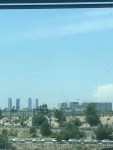 be rushing. I’m arriving in Prague almost 4 full days before I have to be, so I have time. Plus, the flight was squared away before I landed and lunch was on
  American (the airline). The only problem is I have someone waiting for me on the other side. I actually had to contact my mother to update my person because the only contact I have for him is email, and my connection in Madrid’s airport seems to only be enough to communicate on Facebook. Though, if nothing else, at least I have a beautiful view.
 and it only took off about half an hour late. My contact met me with a sign (that was a cool first experience) and got me squared away with a transportation pass and my dorms. Because I got in so late, after thanking him, unpacking, and meeting my roommate, I washed the flight off of me, registered for internet, and got some much needed shuteye, with the expectation that I would be meeting the blok’s office manager at 8am the following morning. Time is only a little off punctuality here, and I have discovered that most things don’t open until 10am.
 this time last year, I couldn’t imagine I would be on. As I think back, I had just finished defending my thesis and beginning the long process of editing this time last year, while I prepared for a move to Ann Arbor, Michigan (another impossibility in the grand scheme of things, looking back). Yet, here I sit, after spending the last few weeks traveling to see friends and the last few days saying goodbye to family, about to embark on a trip to Prague. While I will be far from alone, I take this trip with all the wonderment and impossibility I have associated with it since it became a possibility in September.
 Information, I have been gifted the opportunity to intern at the National Library of Technology (NTK) in Prague. One of the oldest and most prestigious libraries in their nation, this opportunity holds so many great experiences for me. I have been in communication with the director for about 9 months now, and our conversations have given her the ability to tailor this experience not only to prepare me for the career I am pursuing, but also to build on my interests of history, libraries, and management to show me what type of professional world I may be embarking upon.
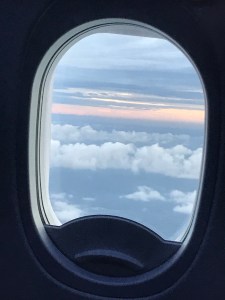 have left is to take flight for another life-changing adventure. To help chronicle this adventure, my hope is to write weekly about the experiences I have. While this will definitely keep a timeline of the places I visit, I will also be going on about the things I am learning in the library profession. So, please, bare with me, and embark on this journey with me. A summer of books, castles, and delicious European cuisine await.
 Raven K