

In the ongoing discussion of the state of reference, Kenney, Albanese, and Sweeney attempt to put in their thoughts to the conversation that seems to be taking a long time to settle in the library world. From discussions on what modern reference should look like to the declaration that reference is dead, not only does it seem that information professionals cannot agree on the state of affairs of reference, but they also seem to disagree on how reference has gotten to where it is.
Starting with the 2015 and 2016 articles Kenney participated in, broad claims with little evidence are used to make his points. One of the glaring problems I saw with his argument came at the end of his 2015 post, where he states that little formal research has actually been done on the issue he is addressing. If this is truly the case, which, I feel, to a point it is, his claims hold less credence, as there is little evidence to back it up. Still, his perceptions due warrant investigation, which may be the true point he is trying to make. Kenney’s inability to state this is a public library issue and placing the implications of suffering reference on all libraries also concerns me to a point.
His collaboration with Albanese in 2016 addresses some of these issues as other information professionals saw them. I was glad to see that Kenney’s assumptions caught the eyes of professionals in the field. Like Goldwater stated in the Albanese and Kenney post, I feel that the conversation about the state of reference and its future clearly needs to be had, but the assumptions without follow up that are postulated in Kenney’s original post are unwarranted. Even small amounts of evidence to back his claims would have placed his original work in much higher regard, to me at least.
Sweeney attempted to address the many reasons as to why reference is believed to be dead by many in the profession. I agree in his assessment that it is “all about perception,” but I feel he also falls short in his argument. While it seems that his postulation lies with the statement “I think there is something better than reference,” I feel that Sweeney’s arguments become convoluted due to lack of clarity. Yet, maybe this is exactly the point, as the information professionals that are addressing the issue of reference often find themselves incapable of articulating what they truly mean. As he concludes his short piece, I was left questioning whether he was arguing to rid library training of reference training altogether or just enhancing it with the services that would better replace it. The TED Talk he included made this even more confusing, as he seemed sure that all information professionals needed to be aware of Tim’s discussion about the economy and its effect on the environment, but didn’t find it fitting to inform us why he felt this way or how it pertained to the issue at hand.
These articles did open up to the suggestion of readers advisory as services that have become more prominent and important to public libraries though. In my search to better understand this portion of reference service, I came across an article about a public library’s unique approach to reference and an article discussing the importance of reader’s advisory from different aspects. Interestingly, the article discussing reader’s advisory at large mentioned the program I found in the other article.
Alison Kastner discussed “The Personal Touch” one Portland, Oregon public library put on readers advisory to better address the needs of users. The My Librarian Program started as a virtual library service privately funded by a foundational grant and this funding has allowed not only the development of the program but user testing that has led to improvements over time. Essentially, librarians associated with the program create profiles to provide general information about their interests and patrons can choose from librarians to seek recommendations. This allows for a more personal connection, and creates a unique interaction between patron and librarian. While the service is virtual in nature, it also allows for the implementation of face-to-face interactions for patrons that wish to use it. The idea behind the entire project was to humanize the librarian to encourage interaction, while using the interests of librarians to provide better reader advisory service. Focus groups and other user testing has informed the library of the program’s flaws, which has allowed for the program to grow into a service more tailored to the needs of the patrons. Still, Kastner discusses that their private funding is not something that all libraries have access to, and provides information for making steps toward programs like this in instances where such funding may not be available. Interestingly, it seemed their take away from this was that the downfall of reference and readers advisory, at least in their library, was that people misunderstood what librarians do. This is not the first time this notion has occurred to me, and, so, I wonder if this is the issue that information professionals may need to be addressing.
The second article on readers advisory had Duncan Smith addressing the who, how, and why of readers advisory. Arguing that reader’s advisory is the “cornerstone of the public library’s future,” Smith addresses the service from the aspects it must be understood to be implemented (Smith, 11). In reaction to Bill Crowley’s article “Time to Rethink Reader’s Advisory Education?,” Smith addresses the points Crowley makes by stating his opinions on the who, how, and why. While Crowley feels that reader’s advisory education should be implemented throughout library schools, Smith counter argues stating the like other library services, reader’s advisory can be taught on the job. He states that RA needs to be professionalized, but not necessarily at the degree level. This is furthered as he goes into his discussion of “how.” Pulling from studies into the implementation of reader’s advisory in libraries, Smith gives suggestions on how best to capitalize on reader’s advisory practices. While it is not necessarily an issue of librarian education, he does feel that institutionalized standard practices, which can be implemented through training, peer coaching, and performance reviews, is the best approach to the issue. Still, the “why” is the crux of the argument. While Smith argues that funding goes best with education-based RA practices, he states that there is a resistance to these due to an anti-fiction sentiment that has been overcome in libraries within the last century. Yet, in his work he also feels that librarians do not properly address the influence of books, and that may be why the acceptance of reader’s advisory training has come by so slowly. Essentially, Smith states that the lack of education in reader’s advisory is not about education at all, but lies with the profession’s general attitude toward books, which is interesting given the nature of the librarian profession.
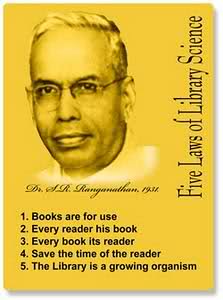

 information is available at a user’s “finger tips,” there are services that reference librarians will always be better at and that those skills should be the focus, moving forward, as they will never be in short supply (Janes, 25). Taylor’s approach addressed the current situation of the reference librarian and how it may develop as the profession moves forward with changes. Like Simmons, Taylor addresses the reference librarian as information intermediator, discussing the formulation of a query and search (visceral à conscious à formalize à compromised) to the importance of the reference librarian’s knowledge of the process (user terminology à system terminology), and how a library packages such services to appeal to the user (wholesaler vs. retailer).
 Many similar themes flowed through the works of both men, but their close association and connections to similar institutions probably allowed for this. Green’s focus remained on the responsibilities of the librarian though. His examples highlighted the vast knowledge a head librarian should possess, which made me think of the NYC reference librarians of yesteryear that Kristin has mentioned. Though, I suppose they got their start from librarians like Mr. Green. He focused on the guidance a librarian should provide to “wholesome” materials of “rational curiosity” that did not overshadow the “degree of enlightenment” a patron may possess (Green, 77). Librarians, and their helpful female assistants (to encourage patrons with a sense of approachability) had certain responsibilities in their guidance, and Green’s views on what made libraries popular emphasized the proper ways for a librarian to act. Rapport, experience, and friendliness of a librarian coupled with a diverse, accessible collection set libraries apart from one another (Green, 78). These types of behaviors were further reflected in Dewey’s convocation.
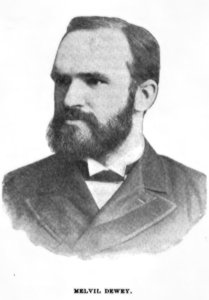 upon metaphor that drew from his vast knowledge, highlighting the prowess of a librarian’s reference abilities and creating a more persuasive argument. Then, he called to the parts of life he knew would pique the interests of his audience the most: school and church. He called for the establishment of a “people’s university” as a way to move past the negative associations of inaccessible libraries of old (Dewey, 8). Stating that the goal of libraries, like that of schools and the church, was to rid the culture of incompetents, he introduced the librarian as a customer service representative that was improving society through their guidance (Dewey, 2).
 Samuel Green and Melvil Dewey are two very prominent figures in library history, but I knew very little about Green, and, therefore, curiosity got the better of me. Upon finishing his article, I did a quick search on him and came up with a plethora of information. Like Dewey, he was involved with the formation of the American Library Association and had ties to the School of Library Economy at Columbia University. While these are expected from a man that shared an important time period with Melvil Dewey, it is the other things he accomplished in the field that struck me. Green is known as the pioneer of libraries being public service oriented. His expansion of library access, f
 Raven K