“The Library of Today…Far Different from the Ancient Chinese “Place to Hide Books In.”

(Title comes from Ranganathan’s The Five Laws of Library Science page 414.)

The Fifth, and final, Law of Library Science is “A LIBRARY IS A LIVING ORGANISM” (Ranganathan, 382). This final chapter is a short 36 pages that provides the least amount of repetition from the rest of the book, with only allowing for an appearance of the law approximately 1.167 times per page. The Fifth Law is stated 36 times throughout the chapter, while its iteration only appears 6 times.

The final chapter opens with a brief description of what Ranganathan means by a living organism with quick connections from his definition to how it applies to libraries. He spends the chapter discussion two important aspects of a “growing organism:” size and evolution. The size portion of the chapter looks at the growth of books, readers, and staff in the library. The portion on evolution looks to the changing forms of what a library means as an institution and the numerous varieties it presents itself as.

When it comes to Size:

First, for a library to grow, its collection of books must go. To plan for such growth, the

Buhr.png
Buhr Remote Shelving Facility, University of Michigan, Ann Arbor, MI

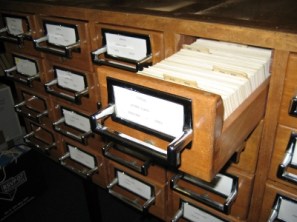
idea of expansion must be ever-present. This is why the planning of buildings and possible expansion is crucial, but it has also led to the evolution of certain systems to better accommodate growth. This includes the introduction of ideas like stack towers and book repositories. The adoption of card systems, in cataloguing, issuing, and shelf-registering, is an explicit example of this. He concludes his discussion on books by highlighting the importance of adopting a tried and true classification system.

Second, for a library to grow, the number of readers it reaches must grow. The size of reading rooms, the issuing method, and safeguards must be considered when dealing with readers. It may be best for multiple reading rooms to be adopted, as to better accommodate large numbers of readers. Open access and the adoption of card issuing systems are the most adaptable to growth. The control of entering and exiting patrons can best safeguard against an uneconomical loss of materials. This postulation struck me as odd, due to its possible intimidating nature.

Finally, for a library to grow, its staff must grow. As the library grows and the staff expands (though, possibly not the staff visible to patrons), specialization and the development of clear-cut departments should be considered to optimize usefulness. From there, if the staff becomes large and robust, a staff council can be considered to help standardize procedures and increase internal communication. The continuity of work, especially by staff visible to patrons, should provide for staff to work seamlessly.

When it comes to Evolution:

Like the physical growth of an organism, all organisms must evolve and vary to continue their ability to survive. The modern library that Ranganathan has spent the entire volume describing is very different than the ancient library, which is emphasized especially in the discussion of the First Law and Second Law of Library Science. The importance of evolution in the library system allows for adaptability and variety in libraries to specialize in specific topics. While different types of libraries have common features, each variety of library has its own special issues. Library specializations, at the institution level, appear in many forms, but a few include the following: school libraries, university libraries, libraries for the blind, and business libraries (Ranganathan provides a more exhaustive, but still incomplete list in his chapter).

When it comes to the Vital Principle:

Ranganathan concludes his volume by stating that all libraries function on the same vital principle that can be understood if one understands the “spirit of the library” (Ranganathan, 415). This spirit is what has made the library capable of weathering the times, and this same spirit will help it continue to adapt in time. The vital principle this spirit resides under states the library “is an instrument of universal education, and assembles together and freely distributes all the tools of education and disseminates knowledge with their aid” (Ranganathan, 415).

Final Thoughts on the Volume:

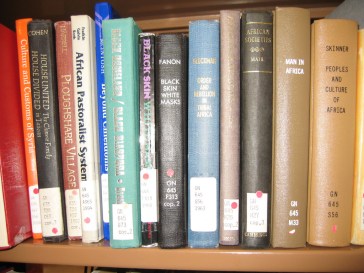
In my reading, I noticed approximately half way through the book this idea of feminizing concepts. While I had been familiar with the use of feminine language when talking about object like ships and cars, I never really put much thought into the other things that are feminized at points. I was not too surprised when Ranganathan referred to Western Europe’s countries as India’s “western sisters,” but I did find myself puzzled that the laws were feminized (Ranganathan, 57). While Law I, IV, and V are never explicitly gendered, Law II and III are specifically referred to as women, in the discussions the laws have in their chapters. Along with them, the “Rule of Least Cost” and “Books are for Preservation,” both used in a dialogue with the First Law of Library Science, are also feminized. I had not realized the idea of feminizing this like transportation and countries (historically because men could “conquer” them and it fit in with the patriarchal society) could also be extended to concepts. These thoughts weighed on me throughout my time with the volume.
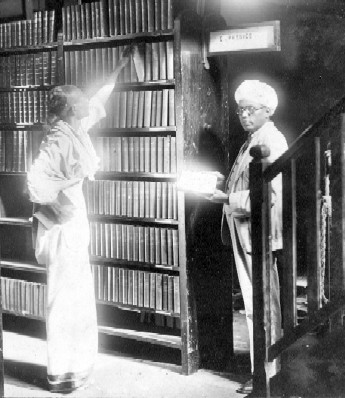
mu07, Madras Stacks.JPG
Madras University Stacks, the dimensions Ranganathan is specifying in his Appendix.

Concluding this 415 page manual on properly setting up libraries in India, there is only one single appendix. This may be due to the inclusion of tables, figures, and photographs throughout the volume, but I still found it odd. This 3 page appendix explicitly draws out the ideal stack shelf, from materials to dimensions. Drawing from the shelves that Ranganathan uses at Madras University, ten tips are provided to build the perfect stack shelf. If carried out to these specifications, a fully loaded shelf would weigh one ton and house 1,000 books in 84 feet of space. This ideal shelf, or at least the ones used in Madras, also use ten cubic feet of teakwood for each shelf.

Throughout the book, Ranganathan alludes to future books to cover topics in more specific detail. Here you can find a list of these books through GoodReads if you are interested in exploring his approach to library science in more depth: https://www.goodreads.com/author/list/566596.S_R_Ranganathan

Images were taken from the following places:
“All Books are Not Monographs”

(Title comes from Raganathan’s The Five Laws of Library Science page 351.)

The Fourth Law of Library Science is “SAVE THE TIME OF THE READER” (Raganathan, 337). As in the previous laws, Raganathan, again, repeats the law and its meaning throughout the chapter. A shift away from books and the reader to focus on the situation within the library itself, an increase in these iterations is prominent. The repetition of law and idea appear approximately 1.7 times per page. Some form of “SAVE THE TIME OF THE READER” shows up 29 times throughout the chapter. Raganathan also explicitly states the Fourth Law 48 times. With only 45 pages to cover this topic, a 0.2 increase of times on the page is interesting, but the content does not lack because of it.

The focus of this chapter can be summed up into the awareness of time economy. In other words, Raganathan focuses on what libraries can do to save the time of their patrons, as time becomes a commodity that many people are unwilling to give up. To do this, he goes back through several aspects of the library that he has already discussed to divulge in the problems that may be faced in optimizing the time a patron spends at each task. A good portion of this chapter looks at the issues addressed by the Third Law from the perspective of the library instead of the patron. From the importance of open access stacks to the library staff’s duties, Raganathan focuses most of the chapter on the in-library experience of the patron. To conclude the chapter, he removes the patron from the library and briefly discusses location, stating that the Fourth Law should be considered in the placement of libraries as well, as to not take up too much time of a reader in their travel to and from the institution.

With time efficiency being the focus of the chapter, Raganathan provided examples for his in-library aspects by explaining a patron’s possible experience in a library. He stated that open access systems were readily adopted in U.S. and English libraries due to their time efficiency because closed stacks could lead to days of searching on the part of both the staff and the reader, which discouraged use. This same type of efficiency is considered in the arrangements of books on shelves. While he states that subject-matter is the best arrangement, the Fourth Law takes another step by stating that placement of subjects that are more popular in more accessible places is also an integral part of retaining readers. This type of arrangement is also why guides should be made available to make stacks more navigable, from maps near the entrance to clearly marked stacks and shelves.
Raganathan then removes the reader from his place in the stacks and addresses time constraints in the search of books themselves. This begins his shift from reader to staff. While he is clear to discuss the importance of time efficient adaptations for the reader in catalogues, bibliographies, and reference services, he shifts the focus from the reader to the staff’s place in these services as well. Understanding that books can address several topics, Raganathan champions the importance of cross-referencing in the catalogue, which, he believes, calls for highly trained staff to do this properly. With vast numbers of materials, like periodicals, Raganathan also suggests the investment in bibliographies, catalogues, and indexes to be essential, and for staff to be able to properly use them for reference and instruct readers on their use as well. The importance of staff and their ability to help readers is encapsulated in his comment that “slow, dull-witted, immobile and absent-minded persons cannot be of any service to the Fourth Law” (Raganathan, 362).

Following these discussions that involve both staff and readers, Raganathan spends most of the rest of the chapter on how saving the time of library staff saves the time of the reader. Most of this discussion can be summed up by the following: standardized library procedures to saves the time of staff and allows them to save the time of readers. With a brief description of changing charging and discharging systems, Raganathan concludes “perhaps it is only in the charging method that the ideal of the Fourth Law has been actually reached,” as he champions the newly established two-card system (Raganathan, 367). He goes on to state that areas of work in optimizing staff time in procedures to provide more time for readers and centralizing catalogue systems, in the long term, saves time and money.

Throughout the chapter, several concepts were introduced that I didn’t previously Call Number Tagsknow about. In trying to learn more, I found it difficult to find a lot of information about these, and, therefore, went back to the book to try and get a better grasp on what I read. In a more focused search, I am sure that I would have found more specific information, but the evolutionary nature of libraries, I believe, may have clouded the general information I was getting back. Paste-down cataloguing (338), day-book and letter discharging (365), and two-card systems (366) were the specific examples I was looking

avery dennison
An Avery Dennison Product.

for. While some resources, albeit a little dated, were available, the brief descriptions Raganathan provided seemed more helpful. I did find it interesting that when Raganathan spoke on call number tags for books that he essentially “plugged” a particular type, specifically “Dennison’s white circular tags, number A-144,” as he stated they were the “most serviceable” (Raganathan, 349). While, in a search, it is difficult to find this historical call number tag, Dennison Manufacturing Company seems to be the producer, which combined in 1990 with a well-known company that still manufactures office supplies globally, and created Avery Dennison.

This chapter also lent itself to a fuller description of Raganathan’s experiences in his

mu03, Connemara Building
“Connemara Building.”

own library, as the focus became more about the institution instead of the books and the readers. Several times Raganathan makes references to his time at the Madras University library. To start out, he states that Madras University adopted an open access system in 1928, just four years after he became head of the library, and three years after he returned from London. Then, in discussing the flaws of cataloguing systems, he references the 70,000 book collection at Madras and the 14 folio volume catalogue that goes with it through the paste-down method. These references and others allows the reader to see the progress Raganathan had made in his tenure as chief

mu12, 1932 Library Course Students and Teachers
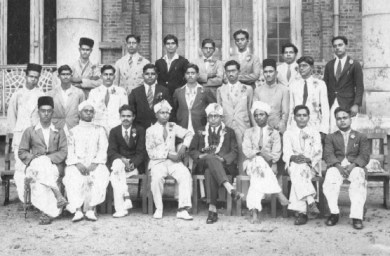
“First University Course in Librarianship, 1932 Students and Teachers.”

librarian and to better understand some of the steps that were later taken with the university’s library. In 1936, just a little more than a decade after Raganathan took over, Madras University would get a new library building. Just a year after this book was published, the first library course was taught at the university. Numerous other achievements in the library system were also accomplished before Raganathan left his post in 1944.


mu08, New University Complex
“New University Complex.”

Images were taken from the following sources:

Other helpful, and historical sources referenced:

“Long-Forgotten but Useful Books”

(Title comes from Raganathan’s The Five Laws of Library Science page 306.)

The Third Law of Library Science is depicted as “EVERY BOOK ITS READER” (Raganathan, 299). Slowly, the repetition of these ideas has increased throughout the book. While the First Law appeared approximately 1.4 times a page, the Third Law has increased to appearing about 1.5 times a page, with the “Third Law of Library Science” and its iterations appearing 47 times throughout the 36 pages, and the repetition of the law itself appearing just 8 times. The focus of the law was quickly summed up in the introduction of the chapter though, as “the Third Law would urge that an appropriate reader should be found for every book” (Raganathan, 299).

card catalogue     While this concept is not always clear of meaning, Raganathan used this short chapter to address the eight main ideas he felt played into the ability of the Third Law being achieved. First, he looked into how the library could provide better service to the reader, through open access, shelf arrangement, catalogues, and reference. In the second part of the chapter, he focused on the aspects that people associated with the library could focus on: popular departments, publicity, extension work, and book selection.

The largest argument that Raganathan made in this chapter was a call to the death of book browsingclosed stacks. His belief in the open access system stems from the idea that closed stacks are not just harmful to readers, but to the books that serve them. Essentially, the urging of browsing stacks was believed to help more books find their readers, in a way that closed stacks could never cater to the population. This is also why he found shelf-arrangement to be important. Not only did Raganathan argue that books should be arranged by subject-matter (which is the basis of the arranging system he founded), but that there were proper shelf dimensions to optimize reader’s browsing large catalogueabilities, and that displays of books could be important for allowing patrons to know what is in a library. The appropriate utilization of cross-reference also provides the same types of important tools for readers to find their perfect books. Finally, Raganathan concludes that, even with all the other tools properly placed, the reference staff is essential for getting books properly circulated to the readers who can best use them. The reference staff provides the personal service libraries cannot do without to understand readers.

The importance of reference turns the focus of the chapter to what libraries can do to provide better patronage, so books can find their readers. The main goal in optimizing library use is to turn potential readers into actual readers (Raganathan, 314). In this way, Raganathan suggested the use of popular departments, such as News or Magazine Rooms, to lure people in. Once in the library, staff could begin cultivating personal connections to try and interest them in the book collection of the institution. Of course, to

reading hour
The full article for “Drag Queens Glam Up Story Hour” can be found by following the “story hours” hyperlink in the next paragraph.

do this, people would need to know of libraries, and, therefore, no form of publicity should be overlooked. Raganathan states “the simplest and the least expensive method of publicity is direct personal talk” (Raganathan, 324). The development of extension work to encourage new patrons is also important. Creating work beyond the library system of book circulation brings in new people, and staff can help them cultivate an interest in reading. “The object of extension work may be said to be an attempt to turn the library into a social centre whose function is the encouragement of reading,” which is why early extension work sometimes introduced itself in the ways of providing reading hours (for both children and illiterate adults), reading workshops, and other activities that would show patrons the importance of books in their daily lives (Raganathan, 327). Finally, he concludes that the development of collections should be an ongoing process in libraries, as the consideration of readers should always be a priority.

By approaching each of these things, the Third Law of Library Science can be achieved. Still, to be able to fully commit to the Third Law, the First Law and Second Law must already be in place, because if books are not used, and not all people have access to books, not all books will find their readers. The types of programs that Raganathan speaks to are clear in many forms throughout modern-day libraries as well. The types of expectations may have changed, but libraries still provide extension work like story hours and community spaces for learning (like Michigan Makers).

Interesting to note, in the discussion of extension work, Raganathan discusses how libraries can be used as a meeting place for community groups. He gives specific examples of groups that meet at British Libraries. In this discussion, he mentions the Workers’ Educational Association explicitly (Raganathan, 331). I found this interesting as he spoke at length of the Seafarer’s Educational Service in his lengthy approach to the Second Law of Library Science. These organizations were both founded by the same man, who was a champion of adult education in England.

“Only an Educated People is an Effective People.”

(Title comes from Raganathan’s The Five Laws of Library Science page 247.)

The Second Law of Library Science focuses around the idea that “books are for all” and is postulated as “every person his or her book” (Raganathan, 74-75). Three of the seven chapters of this book are dedicated to this law, which is the only one that has more than one chapter addressing it. Almost half of the book (224 pages) are specifically about this law. Including numerous iterations of “every person his or her book” and repetition of the Second Law, Raganathan reiterates the law 315 times, similar to his repetition of the First Law of Library Science. The chapters on the Second Law of Library Science address the struggle of actually providing books for all, the success of other countries in implementing the Second Law, and the implications India would face in this implementation.

The first chapter on the Second Law addresses the struggle of actually providing books for all. He starts with what he deemed the easiest barrier to break and progresses as he discusses the issues with providing books to different groups of people. From socioeconomic status to location and ability, Raganathan attempts to demonstrate that universal library service is possible while mentioning the struggles that some groups might face. Like the First Law, he speaks of an older law “books are for the chosen few” which must be broken for books to truly be provided to everyone. He also states that changing ideas on who books are meant for is also important, as the critical issue of adult education was being introduced around the world.

The second chapter on the Second Law of Library Science is about the success of this law in other countries around the world. Raganathan calls this digvijaya, which he states means a “world conquering expedition” (Raganathan, 153). The adoption of the Second Law of Library Science is due to the success of the Library Movement throughout the world. Throughout this chapter, he discusses 29 distinct cases, ranging from focusing on single countries to multiple, before addressing India and its place in this expedition. When plausible, Raganathan makes comparisons to India to show that countries in similar situations have been successful in adopting the Second Law of Library Science and have been capable of establishing decent library systems for the public.

The final chapter on the Second Law of Library Science is specifically about what India would need to do to adopt the mantra that “books are for all.” Raganathan divides this chapter into four main themes, discussing the obligations that particular groups have for the success of a library system: the State, the Library Authority, the Reader, and the Staff. Here, Raganathan establishes understandings that are well-developed in the world of library science today and addresses their importance. He attaches the obligation of co-ordination and finance to the State. He holds the Library Authority responsible for the choice of books and staff. He states that Readers are responsible for following the rules as a civic responsibility. Then, he addresses the staff, holding their obligations to reference, bibliography, reference books, and cataloguing. Of course, there are entire courses in library science that revolve on these individual ideas, specifically because “their business is to know the reader” (Raganathan, 291).

In no particular order, the following is a discussion of some things I found interesting throughout the discussion on the Second Law of Library Science:

The Seafarers Education Service (SES) was founded in 1919 by Albert Mansbridge to help educate men at sea. Mansbridge was an English educator known for his pioneeringAlbert Mansbridge activities in British adult education, and is most known for founding the Worker’s Educational Association in 1903. Through the SES library service was established for men at sea which continues to this day. The College of the Sea grew from these services in 1938, as did the Sea War Library Service that provided books to ally ships during World War II (Kent, Lancour, and Daily, 455). Today, the SES is part of the Marine Society, which was founded in 1756 to provide skilled crews for ships in Great Britain. It refocused its efforts after the war to help support those who chose sea careers following a change in naval training. In 1976, their mission shifted again when they merged with SES to provide education services to seafarers.
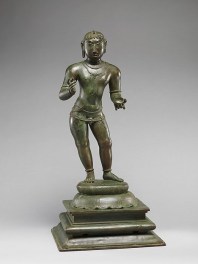
Sambandar     Raganathan explains the universality of the Second Law of Library Science by connecting to Indian saint Sambandar. He explains that this child saint, known for his dedication to writing hymns to the gods due to the gifts bestowed on him, embodied the idea of universal brotherhood in his final worldly act. Upon wedding his wife, he was presented with the gates of heaven. Instead of taking his place immediately, he gathered all from his place, with no regard to the differences between them, and let them all pass to the heavens. Then, he took his place. By connecting to this Indian myth, he reinforced the ideas of the Second Law to his audience, by connecting with their beliefs and understandings of the world.
In discussing the types of reference that staff members should be able to assist readers with, feminism is brought up. Particularly, Raganathan states that a senior preparing a debate about feminism should be able to be helped by library staff. This caught my eye due to the uncommon reference to feminism at this time period. Keeping in mind that Raganathan’s experience in the libraries come from the United Kingdom, the political tides of this time period may have brought this example to him. In 1929, from efforts in the British women’s movement and the developments in garnering the right to vote, Margaret Bondfield was the first woman elected as a cabinet minister. Such instances would make feminism debates possible in British school systems, and, possibly, Raganathan’s examples are pulled from his experiences in the library system.

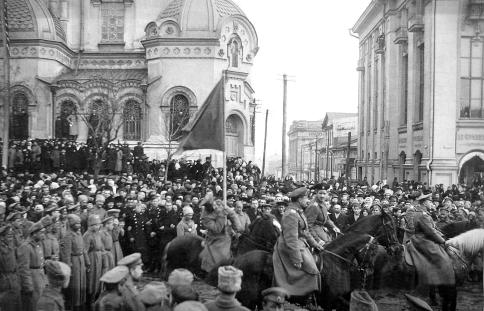
In his original drawing out of the importance of the Second Law, Raganathan mentions the development of a library school in Moscow around 1913. He goes on to quote a national article that could not understand such a development in Russia “which would pave a way for a revolution” (Raganathan, 81). I was incapable of tracking down the source that he referenced, mostly due to the lack of citation standards in this timeBolshevik Revolution.jpg period which doesn’t provide sufficient information to tracking down all sources. Still, I found this revelation interesting, as a revolution of course followed in Russia just four years later. Although it is extremely unlikely that this particular library school had much influence on the Bolshevik Revolution in 1917, the discussion of Soviet Russia in the second chapter on the Second Law of Library Science highlights the importance of libraries in the communist country. They dedicated themselves to ridding the country of illiteracy and established culture centers in many villages, towns, and cities that function as libraries, community centers, and propaganda machines for the Soviet Regime.
Even in 1931, the influence of libraries in Michigan had the prominence to catch the eyes of well-known librarians the world over. While I’m pretty sure there was a specific reference to Michigan in the chapter regarding the First Law of Library Science, two references in the implications chapter on the Second Law of Library Science caught my eye. In discussing the pitfalls of financial insecurity to fund libraries, Raganathan points to an approach established for such funding that is addressed in the Michigan Constitutional drafts that preceded its 1837 statehood. In 1835, the Michigan Constitution developed the idea that crime should fund libraries, as a better educated public would commit far less crime (Raganathan, 254). Therefore, all funds that were garnered through the court systems that did not have other allocations went into the state’s library systems. A Michigan Municipal League document from November 2007 provides tables that indicate fines are still allocated to libraries. The second reference specifies Detroit Public Libraries. Here, Raganathan briefly describes the development of advocating for “purposeful reading,” an idea he held as an obligation for library staff (Raganathan, 292).

In the reading, I found two clear themes emerge that may indicate the importance that Raganathan attached to this law: Andrew Carnegie and India itself. I briefly address both next.

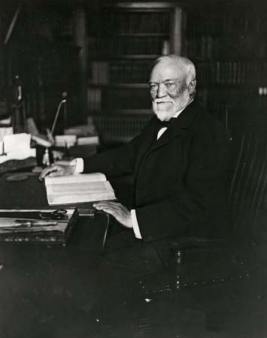
Andrew Carnegie     Because of the influences Raganathan was under, Andrew Carnegie and his generosity through the Carnegie Foundation was extremely prevalent. In fact, there was an entire section in the chapter regarding the domination of libraries on Carnegie himself. On more than one occasion, he dreams of such a benefactor for the Indian library system, and places the success of American, both North and South, and the British systems largely on the efforts of Andrew Carnegie. He does not go into the complexities of the man himself, and seems to only place understanding of what the money his foundation provides as the only thing that needs to be understood to hold him in such high esteem.

The Second Law of Library Science is such a focus in this book because this is the law Raganathan thinks is the one that India was then struggling with. This book is clearly a handbook for the success of libraries in India, whether with the help of their British government or not. Such dedication of time to this particular law continuously points back to the needs that India has and the things they could be adopting to further their cause.British India.jpg

“The four enemies of books: fire, water, vermin, and MEN.”

(Title comes from Raganathan’s The Five Laws of Library Science page 35.)

S.R. Raganathan was a trained mathematician and teacher in the Indian education system when he came to University College, London in 1924 to train as a librarian for a position he had been offered at the University of Madras. When he returned to India in 1925, he ran the library at the University of Madras until 1944, when he took a position Raganathanas librarian and professor at Hindu University until 1947. From 1947 to 1954, Raganathan researched in Zurich, and then, again, returned to his home country where he took several other academic positions before founding and running the Documentation Research and Training Center from 1962 to 1965. Along with the title “Father of Library Science in India,” Raganathan also founded the Colon Classification system in the 1930s. This classification system was first implemented by Raganathan at the University of Madras and is still used at research libraries around the world. The Document Research and Training Center he founded in 1962 has developed into one of the premiere research institutions in India, specifically in regards to its postgraduate programs in library and information sciences.

W.C. Berwick Sayers, the Chief Librarian of the Croydon Public Libraries at the time of Raganathan’s original publication of The Five Laws of Library System, provided the introduction for the man’s seminal work. Sayers had at least 94 publications in his lifetime, gave outstanding attention to children’s services, and specialized in classification systems, which made Raganathan of particular interest to him. Raganathan’s time spent studying in Sayer’s library also made the man important to him. Berwick SayersIn Part I of the Introduction, Sayer seems awed by Raganathan’s accomplishments based on his race, but attests to the unique position of superiority he was capable of claiming due to the experiences he seized. This tone, given the time the book was originally published and the state of British-Indian affairs is unsurprising, but such a tone being taken in the introduction of the man’s book did take me off guard for a moment. Sayer speaks highly of the work contained in the value, believing that the laws have come about as a result of professionalization. He warns that “it must be clear, however, that universal rules or notions must always be given a local and individual application” (Sayer in Raganathan, xix). While the rules set out in this volume are supposedly universal, Raganathan goes on throughout to tailor these laws to the needs of the library sciences in India. Sayer concludes his introduction, giving way to Raganathan’s work by making this distinction of tailoring, although he admits he does not understand the needs of India’s libraries.

The First Law of Library Science is “BOOKS ARE FOR USE” (Raganathan, 1). While it is clearly stated that, like many professional laws, this law should be easily understood, Raganathan takes the first 73 pages of his volume to explain in detail what use means, and how this has changed throughout the time of library science. References to the “First Law” and the specific statement “BOOKS ARE FOR USE” appear 99 times throughout the first chapter, or approximately 1.4 times a page. This repetition to almost excess seems intentional, but needed, as if the reader takes nothing else from chapter one, they will know the first law. He states that the first law has not always been clear though, as originally books were for preservation, and such notions have been hard to break. Yet, Raganathan believes that the steps toward modern libraries will break these patterns. Essentially, he feels that libraries need to break the chains of the shelves and free the books to the readers, because books are no longer rare. He goes further to state one of the downfalls of India’s library systems is that they have a hard time accepting “the hands of readers as the proper place to books,” but this call to action throughout the volume is meant to change these long-held ideas (Raganathan, 4).

books are for preservation
No book should be bound to its shelf.

To be the most effective, Raganathan had many things to say about the state of libraries and the people one finds within their walls. Libraries must be placed where the people are to enhance access and encourage learning. Libraries should be open as long as possible, as the extra cost of operation is worth the investment. Raganathan tells a story of his year at University College, London, where each member of his class had a key to the departmental library to come and go as they needed and not be brought down by the constraints of library hours. In a library where preservation is taken over use, reader comfort and space is not considered, but this must change. A mock dialogue between the First Law, the Rule of Least Space, and the Rule of Least Cost rationalizes opening the libraries to the public, declaring the investment economically wise, but leaves off for a later discussion with the Third Law.

The space is held as important, but the staff of a library must also be considered. Raganathan suggests doing away with the outdated system of garnering library keepers, as preservation is no longer the key. Proper use of a library can only be attained through individuals that are properly trained to meet the needs of the reader. Librarians should be full-time, trained members and their staff should have some scrutiny in considering them. Librarians need to be jacks of all trades (in the form of vast knowledge) with the zeal to continue learning. Libraries as institutions would be better off to invest in educated staffs. Raganathan holds that with the law of library science established, a new profession has been born, and, therefore, librarians must be trained. Salaries must show the new position of these trained librarians, or their perceived status will not change. The vast knowledge a library must have is the responsibility of the librarian, as educating oneself will further the first law. “A modern library cannot exist without readers,” so the librarian’s task is really all about customer service (Raganathan, 61). While not professionally trained psychologists, a librarian’s experience will teach them the ways of human nature, making them better suited to address the needs of patrons. William S. Learned, a prominent librarian in the American library systems, stated that a library should essentially be a “community intelligence service” if created properly (Learned in Raganathan, 69).  Yet, all these aspects do not matter is a librarian is not dedicated to social service.

Essentially, the first law is established to garner a new type of library that Raganathan has seen develop in his time in Great Britain and his understanding of libraries in the United States. The first law and its complete development for use, Raganathan seems to postulate, will place India and its approach to libraries on the maps with those that have made it to the cusp of library science development. A dedication to social service can garner Learned’s “community intelligence service” to properly serve the community so it can serve itself (Raganathan, 69). The complete acceptance of the law “BOOKS ARE FOR USE” is the first step to a revolution in the library. Without a firm grasp and understanding of the First Law, the remaining laws of library science mean nothing.