

(Title comes from Ranganathan’s The Five Laws of Library Science page 414.)
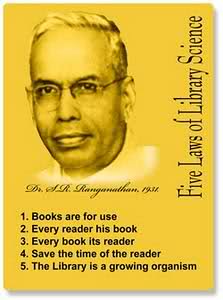
The Fifth, and final, Law of Library Science is “A LIBRARY IS A LIVING ORGANISM” (Ranganathan, 382). This final chapter is a short 36 pages that provides the least amount of repetition from the rest of the book, with only allowing for an appearance of the law approximately 1.167 times per page. The Fifth Law is stated 36 times throughout the chapter, while its iteration only appears 6 times.
The final chapter opens with a brief description of what Ranganathan means by a living organism with quick connections from his definition to how it applies to libraries. He spends the chapter discussion two important aspects of a “growing organism:” size and evolution. The size portion of the chapter looks at the growth of books, readers, and staff in the library. The portion on evolution looks to the changing forms of what a library means as an institution and the numerous varieties it presents itself as.
When it comes to Size:
First, for a library to grow, its collection of books must go. To plan for such growth, the

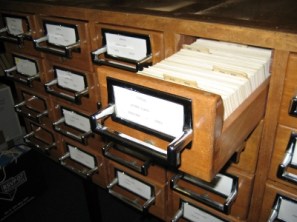
idea of expansion must be ever-present. This is why the planning of buildings and possible expansion is crucial, but it has also led to the evolution of certain systems to better accommodate growth. This includes the introduction of ideas like stack towers and book repositories. The adoption of card systems, in cataloguing, issuing, and shelf-registering, is an explicit example of this. He concludes his discussion on books by highlighting the importance of adopting a tried and true classification system.
Second, for a library to grow, the number of readers it reaches must grow. The size of reading rooms, the issuing method, and safeguards must be considered when dealing with readers. It may be best for multiple reading rooms to be adopted, as to better accommodate large numbers of readers. Open access and the adoption of card issuing systems are the most adaptable to growth. The control of entering and exiting patrons can best safeguard against an uneconomical loss of materials. This postulation struck me as odd, due to its possible intimidating nature.
Finally, for a library to grow, its staff must grow. As the library grows and the staff expands (though, possibly not the staff visible to patrons), specialization and the development of clear-cut departments should be considered to optimize usefulness. From there, if the staff becomes large and robust, a staff council can be considered to help standardize procedures and increase internal communication. The continuity of work, especially by staff visible to patrons, should provide for staff to work seamlessly.
When it comes to Evolution:
Like the physical growth of an organism, all organisms must evolve and vary to continue their ability to survive. The modern library that Ranganathan has spent the entire volume describing is very different than the ancient library, which is emphasized especially in the discussion of the First Law and Second Law of Library Science. The importance of evolution in the library system allows for adaptability and variety in libraries to specialize in specific topics. While different types of libraries have common features, each variety of library has its own special issues. Library specializations, at the institution level, appear in many forms, but a few include the following: school libraries, university libraries, libraries for the blind, and business libraries (Ranganathan provides a more exhaustive, but still incomplete list in his chapter).
When it comes to the Vital Principle:
Ranganathan concludes his volume by stating that all libraries function on the same vital principle that can be understood if one understands the “spirit of the library” (Ranganathan, 415). This spirit is what has made the library capable of weathering the times, and this same spirit will help it continue to adapt in time. The vital principle this spirit resides under states the library “is an instrument of universal education, and assembles together and freely distributes all the tools of education and disseminates knowledge with their aid” (Ranganathan, 415).
Final Thoughts on the Volume:
In my reading, I noticed approximately half way through the book this idea of feminizing concepts. While I had been familiar with the use of feminine language when talking about object like ships and cars, I never really put much thought into the other things that are feminized at points. I was not too surprised when Ranganathan referred to Western Europe’s countries as India’s “western sisters,” but I did find myself puzzled that the laws were feminized (Ranganathan, 57). While Law I, IV, and V are never explicitly gendered, Law II and III are specifically referred to as women, in the discussions the laws have in their chapters. Along with them, the “Rule of Least Cost” and “Books are for Preservation,” both used in a dialogue with the First Law of Library Science, are also feminized. I had not realized the idea of feminizing this like transportation and countries (historically because men could “conquer” them and it fit in with the patriarchal society) could also be extended to concepts. These thoughts weighed on me throughout my time with the volume.
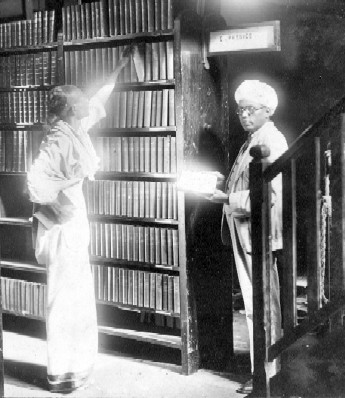
Concluding this 415 page manual on properly setting up libraries in India, there is only one single appendix. This may be due to the inclusion of tables, figures, and photographs throughout the volume, but I still found it odd. This 3 page appendix explicitly draws out the ideal stack shelf, from materials to dimensions. Drawing from the shelves that Ranganathan uses at Madras University, ten tips are provided to build the perfect stack shelf. If carried out to these specifications, a fully loaded shelf would weigh one ton and house 1,000 books in 84 feet of space. This ideal shelf, or at least the ones used in Madras, also use ten cubic feet of teakwood for each shelf.
Throughout the book, Ranganathan alludes to future books to cover topics in more specific detail. Here you can find a list of these books through GoodReads if you are interested in exploring his approach to library science in more depth: https://www.goodreads.com/author/list/566596.S_R_Ranganathan
Images were taken from the following places:
 know about. In trying to learn more, I found it difficult to find a lot of information about these, and, therefore, went back to the book to try and get a better grasp on what I read. In a more focused search, I am sure that I would have found more specific information, but the evolutionary nature of libraries, I believe, may have clouded the general information I was getting back.


 While this concept is not always clear of meaning, Raganathan used this short chapter to address the eight main ideas he felt played into the ability of the Third Law being achieved. First, he looked into how the library could provide better service to the reader, through open access, shelf arrangement, catalogues, and reference. In the second part of the chapter, he focused on the aspects that people associated with the library could focus on: popular departments, publicity, extension work, and book selection.
 closed stacks. His belief in the open access system stems from the idea that closed stacks are not just harmful to readers, but to the books that serve them. Essentially, the urging of browsing stacks was believed to help more books find their readers, in a way that closed stacks could never cater to the population. This is also why he found shelf-arrangement to be important. Not only did Raganathan argue that books should be arranged by subject-matter (which is the basis of the arranging system he founded), but that there were proper
  abilities, and that displays of books could be important for allowing patrons to know what is in a library. The appropriate utilization of cross-reference also provides the same types of important tools for readers to find their perfect books. Finally, Raganathan concludes that, even with all the other tools properly placed, the reference staff is essential for getting books properly circulated to the readers who can best use them. The reference staff provides the personal service libraries cannot do without to understand readers.
 activities in British adult education, and is most known for founding the Worker’s Educational Association in 1903. Through the SES library service was established for men at sea which continues to this day. The College of the Sea grew from these services in 1938, as did the Sea War Library Service that provided books to ally ships during World War II (
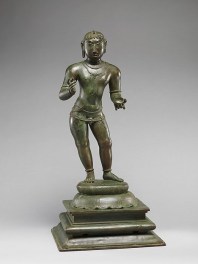 Raganathan explains the universality of the Second Law of Library Science by connecting to Indian saint Sambandar. He explains that this child saint, known for his dedication to writing hymns to the gods due to the gifts bestowed on him, embodied the idea of universal brotherhood in his final worldly act. Upon wedding his wife, he was presented with the gates of heaven. Instead of taking his place immediately, he gathered all from his place, with no regard to the differences between them, and let them all pass to the heavens. Then, he took his place. By connecting to this Indian myth, he reinforced the ideas of the Second Law to his audience, by connecting with their beliefs and understandings of the world.
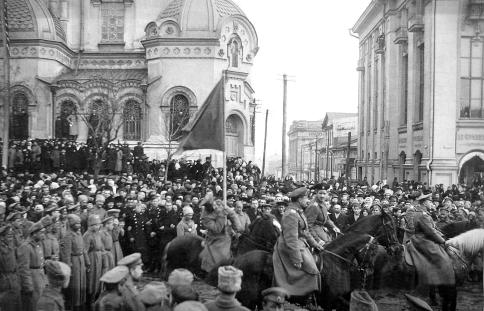 period which doesn’t provide sufficient information to tracking down all sources. Still, I found this revelation interesting, as a revolution of course followed in Russia just four years later. Although it is extremely unlikely that this particular library school had much influence on the Bolshevik Revolution in 1917, the discussion of Soviet Russia in the second chapter on the Second Law of Library Science highlights the importance of libraries in the communist country. They dedicated themselves to ridding the country of illiteracy and established culture centers in many villages, towns, and cities that function as libraries, community centers, and propaganda machines for the Soviet Regime.
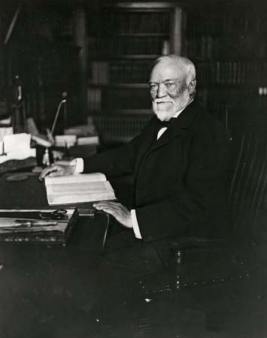 Because of the influences Raganathan was under, Andrew Carnegie and his generosity through the Carnegie Foundation was extremely prevalent. In fact, there was an entire section in the chapter regarding the domination of libraries on Carnegie himself. On more than one occasion, he dreams of such a benefactor for the Indian library system, and places the success of American, both North and South, and the British systems largely on the efforts of Andrew Carnegie. He does not go into the complexities of the man himself, and seems to only place understanding of what the money his foundation provides as the only thing that needs to be understood to hold him in such high esteem.
 as librarian and professor at Hindu University until 1947. From 1947 to 1954, Raganathan researched in Zurich, and then, again, returned to his home country where he took several other academic positions before founding and running the Documentation Research and Training Center from 1962 to 1965. Along with the title “Father of Library Science in India,” Raganathan also founded the
  In Part I of the Introduction, Sayer seems awed by Raganathan’s accomplishments based on his race, but attests to the unique position of superiority he was capable of claiming due to the experiences he seized. This tone, given the time the book was originally published and the state of British-Indian affairs is unsurprising, but such a tone being taken in the introduction of the man’s book did take me off guard for a moment. Sayer speaks highly of the work contained in the value, believing that the laws have come about as a result of professionalization. He warns that “it must be clear, however, that universal rules or notions must always be given a local and individual application” (Sayer in Raganathan, xix). While the rules set out in this volume are supposedly universal, Raganathan goes on throughout to tailor these laws to the needs of the library sciences in India. Sayer concludes his introduction, giving way to Raganathan’s work by making this distinction of tailoring, although he admits he does not understand the needs of India’s libraries.

 information is available at a user’s “finger tips,” there are services that reference librarians will always be better at and that those skills should be the focus, moving forward, as they will never be in short supply (Janes, 25). Taylor’s approach addressed the current situation of the reference librarian and how it may develop as the profession moves forward with changes. Like Simmons, Taylor addresses the reference librarian as information intermediator, discussing the formulation of a query and search (visceral à conscious à formalize à compromised) to the importance of the reference librarian’s knowledge of the process (user terminology à system terminology), and how a library packages such services to appeal to the user (wholesaler vs. retailer).
 Many similar themes flowed through the works of both men, but their close association and connections to similar institutions probably allowed for this. Green’s focus remained on the responsibilities of the librarian though. His examples highlighted the vast knowledge a head librarian should possess, which made me think of the NYC reference librarians of yesteryear that Kristin has mentioned. Though, I suppose they got their start from librarians like Mr. Green. He focused on the guidance a librarian should provide to “wholesome” materials of “rational curiosity” that did not overshadow the “degree of enlightenment” a patron may possess (Green, 77). Librarians, and their helpful female assistants (to encourage patrons with a sense of approachability) had certain responsibilities in their guidance, and Green’s views on what made libraries popular emphasized the proper ways for a librarian to act. Rapport, experience, and friendliness of a librarian coupled with a diverse, accessible collection set libraries apart from one another (Green, 78). These types of behaviors were further reflected in Dewey’s convocation.
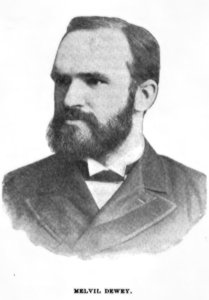 upon metaphor that drew from his vast knowledge, highlighting the prowess of a librarian’s reference abilities and creating a more persuasive argument. Then, he called to the parts of life he knew would pique the interests of his audience the most: school and church. He called for the establishment of a “people’s university” as a way to move past the negative associations of inaccessible libraries of old (Dewey, 8). Stating that the goal of libraries, like that of schools and the church, was to rid the culture of incompetents, he introduced the librarian as a customer service representative that was improving society through their guidance (Dewey, 2).
 Samuel Green and Melvil Dewey are two very prominent figures in library history, but I knew very little about Green, and, therefore, curiosity got the better of me. Upon finishing his article, I did a quick search on him and came up with a plethora of information. Like Dewey, he was involved with the formation of the American Library Association and had ties to the School of Library Economy at Columbia University. While these are expected from a man that shared an important time period with Melvil Dewey, it is the other things he accomplished in the field that struck me. Green is known as the pioneer of libraries being public service oriented. His expansion of library access, f
 Raven K