
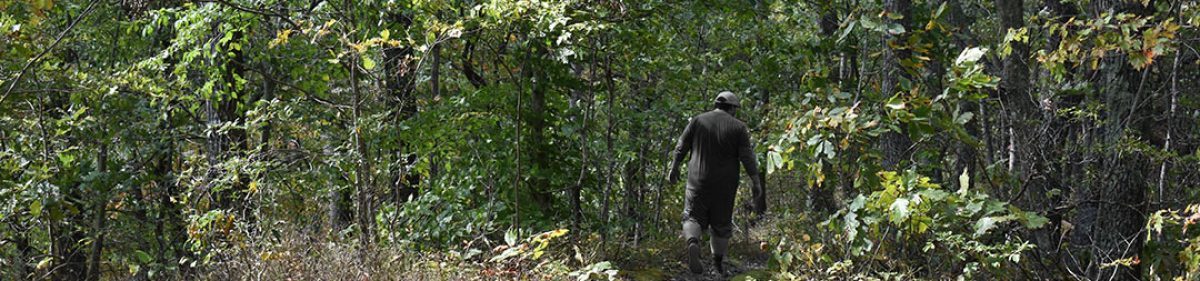

Konopiste is a castle from the fourteenth century located approximately 40km from Prague. It’s most well-known resident (at least in world history standards) was Archduke Franz Ferdinand. Originally a hunting castle, the estate was purchased by Ferdinand after his cousin Rudolph visited it, knowing it would suit the man. Now, Konopiste is a beautiful estate run by the state, which contains the castle, it’s surrounding gardens, the “pond,” and a rose garden. The property came into possession of the state after Ferdinand’s assassination in 1914, but was used for various purposes throughout both world wars and the communist eras before it was turned into an historical site and restored.
Today, you can visit Konopiste by taking a train to Benesov and walking the approximate 2km to the castle (through the very scenic route of its gardens). It is a destination of many in the Czech Republic due to their connection to Ferdinand’s wife, Duchess Sofia (who was a Czech woman). While the tours are a tad expensive, there are four offered, and the information and views are worth every koruna. There is no photography allowed inside the castle, so getting glimpses at the Archduke’s life requires the fee. On any day you can visit the North or South Salons (two separate tours), the private flat of Franz Ferdinand, or go on a hunting tour. There is even a range that can be used on the property.

Traveling with my cultural attaché and the Turkish interns that joined us this week, we got a deeper look into the lives of the Archduke’s family by taking a tour of his flat. In my time in the Czech Republic, I have become fascinated with this man because of the information I have learned regarding his place in history, but the new information acquired here just piqued my interest more. Actually, my time at Konopiste made me question even more why the only this we know about Archduke Franz Ferdinand is that his assassination started World War I. While this is clearly true and is by far the reason world history finds him important, the complexity of this man is often lost. In fact, it took me coming to the Czech Republic to even learn that he was not the only one that died the day he was assassinated. His wife, Sofia, was also killed that day, orphaning their 3 children. You can actually view the dress she was wearing that day on the tour (at least Tour 3, of the private flat).

While you get a brief introduction to his political and military life, the focus of the tour is on his private life. The walls of the castle are lined with his trophies, which indicate the importance of him choosing a hunting castle to reside in. Ferdinand made his first animal kill at the age of 8 and was an avid hunter until his death at age 50, killing some 275,000 animals all over the world. Each trophy is carefully marked in his home with the date and the place, but some get more distinctions, like the number of the kill or who was with him. Some of these trophies are actually from his family (such as one that was his daughter’s from age 3).

Still, the more private areas of the estate are quite homey. The children’s playroom is covered in Sofia’s art (the daughter and oldest of the siblings). There are books and model boats (which the boys were quite fond of). In the study, there is even a portrait of Emperor Franz Josef I as a young man. What struck me at that was that I don’t think I’ve ever seen the man depicted as young. All other pictures I have ever seen were from near the end of his rule, when he was at least in his eighties.

Like many stories about the Czech people, the story of Franz Ferdinand and his family is tragic. While they were quite happy at Konopiste, from what can be determined, this was also a place of sanctuary for them. Ferdinand’s marriage to Sofia was never fully accepted. She was a countess when he began courting her and Franz Josef disapproved the first time he asked for her hand, but he did not give up. A year later, he approached the emperor again and received permission to marry her. This raised her status to Duchess, which still placed her below the status of the Archduke. As a stipulation of their marriage, Ferdinand and Sofia also had to renounce their children’s right to the throne, which is what led Charles to become emperor after Ferdinand’s assassination and the death of Josef.

The death of Ferdinand marked the beginning of some very tragic ends for his family. Sofia travelled with Ferdinand for his trip to Sarajevo after leaving their children from a short holiday. In the attempt to kill both the next heir to the throne and his right-hand man in the military, the conspirators failed. While they were successful in taking out Ferdinand, they missed his general and killed his wife. This orphaned their three children (Sofia, the oldest, still a teenager). They would leave Konopiste for a castle owned by Sofia’s family (the Hohenbergs), where they would be cared for by their teacher and Ferdinand’s step mother. They survived the war, but WWII would not be so kind. While Sofia married a German man, her brothers were not so lucky in their position. Late in the war, they ended up in concentration camps that they did not survive. Sofia lived until her eighties and her daughter is still alive today (and in contact with the caretaker of Konopiste).

The chance to learn more about the family and story of Archduke Franz Ferdinand was quite fascinating. While there we also walked down to the “pond,” though I’m not quite sure how anyone could categorize it as such, and spent some time in the rose garden, where we were acquainted with several peacocks. As is the luck of the weather, we spent the last bit of our time at Konopiste trying to outrun a storm. We did not succeed, but a little rain never hurt anybody. The problem is that the brief, strong storm caused damage to the train tracks leading back to Prague. We spent about three hours at the station before we decided to find a new way back (as this type of delay is extremely unusual in this part of the world). Our group ended up with an Uber back to the city, which was definitely an interesting experience, but it did allow us to see some of the villages just outside of Prague, which I really liked. Making it back much later than anticipated, it was nice to make it back to my dorm for some much needed sleep.

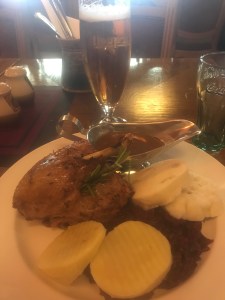
 Bridge area from my dorm. There I watched the England-Panama match over some lovely food. I made the trek back up to my dorm, but decided to sit out the other two matches, getting some rest before the week ahead. I watched a movie and did some reading before getting ready for the week of work ahead.

 have. One of our services manager, a sociology student on the services team, and I began working last week on the project, and testing of our original idea started on Wednesday. This meant that we had approximately 6 observations (morning and afternoon runs) when we sat down on Monday. Comments were made by the manager, edits were made by us, and a new round of testing began. The problem is, we are working with extremely raw numbers (visual observations) and adding this information to spreadsheets (trust me, I hate excel) with the collections of approximately 150 data points. So, as I tried to make modifications, my mentor suggested the creation of a database, which is beginning for later iterations of the project. We are currently just focusing on one of the six floors in the library, so expansion to include the entire library would be even more unwieldy than our current collection (almost 1000 data points).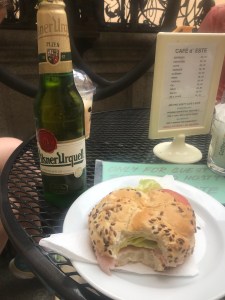


 the most crucial of interactions (like eating and shopping), and I think I am getting there. Beyond the basics (“yes,” “no,” “hello,” “thank you”), I have now started some simple phrases and am learning to count. While I wish I had started a bit sooner with this (I’m now halfway through), I hope that my contacts here may actually allow me to stay up on this type of language learning, as I hope to visit this country more once I can again.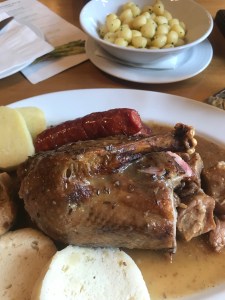


 at least, pubs capable of playing the games. After this experience, I decided to spend Sunday in the more tourist areas of the city, because I knew many of them were catering to their international tourists, even though I knew this would be more expensive for me.
 the games. I think I may have found a new favorite place in Kinsky Garden. It’s just a different part of the ruins, but its completely enclosed and it doesn’t seem like many people pass through it. Laying your hands on the stone, you can feel the century of history contained in the walls. Although these ruins faced nothing too drastic and can’t put some great battle story in its place, they endured through so much (the First Republic, the Second Republic, German occupation, WWII, communism…) and you could feel it in the stone, from the etchings, through the graffiti.
 silence, but the Mexico-Germany game definitely brought in some more people. I sat next to a group of Mexican tourists for the first half of the game and their seats were taken by some German tourists for the second half. I think those interactions are just as nice as the games, even if we don’t actually speak. I went back to the dorms for the late game, where the students watching were definitely routing for Brazil over Switzerland. It was a very relaxed weekend full of good beer and good futbol.

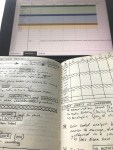 that has a background in sociology. I think he has a much better grasp on the concept than I do, but we broke it down, developed a methodology, and began testing at the end of the week. A meeting with our supervisor on Monday followed by a meeting together will allow for changes in the methodology to make it work better for the library. Then, we can begin training others so that all information gathered is consistent. My colleague and I are both leaving at the end of the summer, so having someone to continue the project once we leave will be crucial.

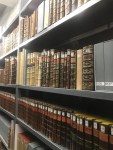 collection contains books from the sixteenth-eighteenth centuries. Mostly rebound in the 1960s, the collection is in decent condition and the library is working on providing consistent conditions, although, sadly, not ideal. It was interesting to look at the books there. Although I cannot read any of them (most are written in Latin or German), it is awesome to see the tradition of scientific work in the Czech Republic.
 potential projects for them. Then, I sat in on a presentation for a student before he goes to conference next week in Germany. I spent the rest of the day with my French colleague as we embarked on a WWII Tour of Prague. While I didn’t learn anything that was a complete revelation, the tour provided more details about my understanding of this area, especially the city during the war. The contrast between this guide and the one we had in Karlstejn were so different, and I wish I could have seen that kind of enthusiasm at the castle.
 that the First Republic was announced to the catacombs under Old Town Hall) were shown along with stories accompanied by historical photographs (like Hitler addressing the people from Prague Castle after sneaking into the country ahead of the Czech president). The pride in the Czech story was clearly present, and, as my colleague noted, the significant points Czechs have in history, they hold onto with a fervor. It’s so nice to hear those stories though, because, often, the Central and Eastern European story is lost among others once you leave the area. One illustration of this comes from my colleague, who had no idea there was a Munich Agreement that is seen as a great betrayal to the Czech people that her government was apart of. Her knowledge of WWII doesn’t include the Central and Eastern European perspective, and, mine wouldn’t either if I hadn’t become interested in the region a few years ago. Now, I clamber to learn as much as I can, because their history, while often tragic, is so important when caught between these warring nations.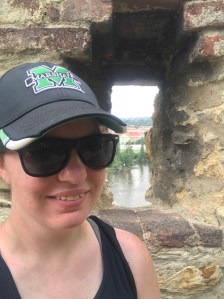
 Praha on Sunday and Stephanie’s father was in the city visiting, so a cookout was had to say hello to new people and goodbye to others. Although I knew most of the way on the metro, I decided to take the bus out to Pisnice, where my mentor resides. After 4 buses, a tram, a rainstorm, and some walking, I finally arrived about an hour and a half after I had left. The place is beautiful and I now understand why Cinzia spoke so fondly of their garden. A large willow tree stands in their backyard, which is walled, and it is just nice to take in the country air (or, at least, more country air than in the heart of the city). We laughed, we ate, and we drank well into the night, and I don’t think there was a better way to send off my new friend. I hope the rest of her travels find her well.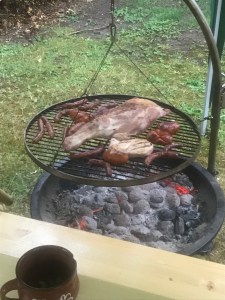
 visible. I took a bus into the main part of the city and walked to the castle high above everything else. On my way, I came once again upon the Dancing House, a controversial office building in the city, and the Cathedral of St. Cyril
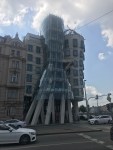 and Methodius. This church actually houses one of the only free museums in the city, which speaks of the martyrs from World War II who snuck their way into the city to attempt to assassinate Heydrich. With the attempt being successful, a massive manhunt for the killers began. They sought refuge with five others in this cathedral. A fire fight killed three of the men, while the rest committed suicide when the Gestapo tried to smoke them out of the catacombs.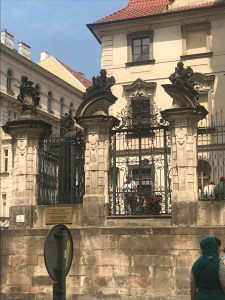
 of Vysherad. Instead of walking through one of the two gates into the fortress’s grounds, I decided to climb up the back way. At the top, there were beautiful views of the river and the rest of the city. Vysherad contains a cemetery,
 cathedral, royal gardens, and beautiful architecture. I ate lunch at a cafe that overlooked the cemetery before spending well over an hour taking in those laid to rest. It always takes my breath away how beautiful European cemeteries are. From their intricate memorials (by statue, tombstone, or ironwork) to their closeness to nature (as graves are not tended to in the same way as U.S. cemeteries), so many things catch your eye and take your breath away. The views were just as beautiful, and I spent much of my time just looking out over the river or over the city.
 upon me. Hiding under an archway to wait for the worst of it to stop, I left the grounds via the brick gate in search of a restaurant suggested to me by a friend that had visited the city previously. I found U Kroka easily, ordered a beer and the rabbit (the
 suggestion of my friend) and settled in for some light reading on a rainy Sunday. Two hours later, I made my way back home for a relaxed evening before the beginning of another week at the office.
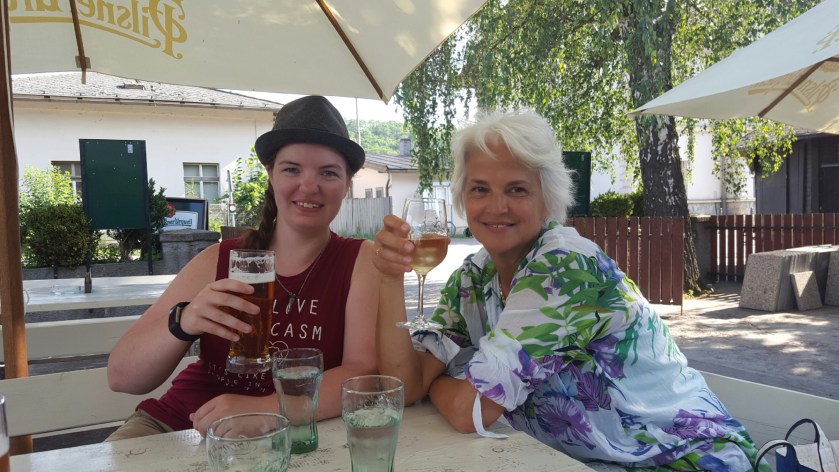
 to her birth country of Italy. Cinzia is a fiery Italian-American New Yorker who moved to the U.S. in the late 1990s and became a teacher once she settled in New York. We met soon after she made it to Prague and had lovely conversations about our experiences with the world. Taking advantage of this connection, Stephanie suggested two days of experiences together. Wednesday we went to the Praha Zoo together, going into the heart of the city, taking
 a boat up the river, and experiencing a day among the animals. On Thursday, Stephanie joined us on an adventure outside of Praha to a fourteenth century castle, Karlstejn. While neither of us can provide explicit information about these things, having someone to take them in with made them that much more exceptional. While I had spoken with Cinzia prior to these two days, I think that our time together on these trips solidified a friendship that I truly hope continues as we walk through life on our different paths.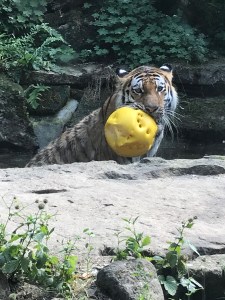
 Czech culture that I don’t think many would think of. Unlike in the U.S., this zoo houses both land and sea animals, combining the ideas of American zoos and aquariums. It is on the outskirts of the city and is a vast amount of land dedicated to animals, plants, and experiences. We spent about four hours at the zoo and didn’t even make it through half of it. The place is meant truly for the Czech people though. In my opinion, the layout and the exhibits highlight
  how these people understand and respect the life of animals. In no place in the United States would you find so much land dedicated just to them. The zoo was also a place for family. When we first arrived, we passed many mothers with their children, stopping and watching the animals, talking to their young boys and girls about them. Then, as the day went on, full families became much more the norm. We were out of place in our time at the zoo not because we were Americans, but because it definitely seemed to be a place of family education.
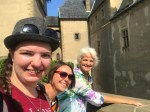 Thursday was just as pleasant. Meeting at the train station, we headed out of Praha with Stephanie telling us some things about the places we passed. Upon arrival, we walked from the train station to a small Greek restaurant and further discussed the castle we were getting ready to see. Karlstejn was built in 1348 and the village beneath it was renamed to be the same as the castle. It was used through the seventeenth century and was renovated in the nineteenth century to a likeness of its original glory. Now, of course, it is largely a tourist attraction. In the fourteenth century, Charles IV resided there and, for a time, the Crown Jewels were housed in the fortress. Like many fortifications, Karlstejn sits at a high elevation for strategic purposes.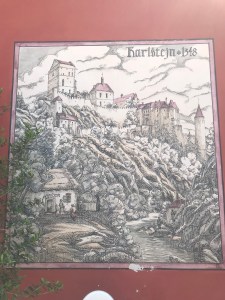
 led to more pleasant conversation after the tour. Many of the items in the castle are not original, but the stories and myths that surround them are interesting. The thing is that the facts and myths were not clearly separated by the
  guide, which sometimes made it difficult to tell what she was telling us actually happened and what was pure conjecture. Her perceived lack of interest, at least by us, did not help this issue. Though, every tour guide is different, which leads to varying experiences. I would definitely recommend the tour, if nothing else, just to see inside the castle and its inner grounds.
 Charles IV, for example, holds a name in the capital as well. It isn’t just his residence from Karlstejn, but you see him everywhere, from Charles Bridge to Charles University and his final resting place at St. Vitus Cathedral within Prague Castle. These historical outings have led to some interesting conversations with my Czech colleagues about their understanding of their history as well, and I can’t wait to keep learning in this way.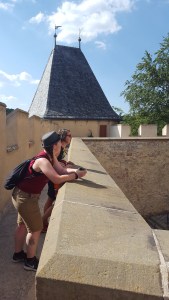
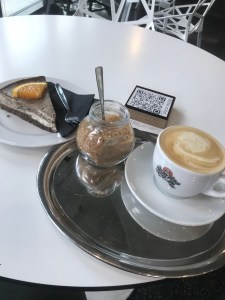


 was pointed in the direction of Palladium to find something more suitable. I ended up with a sinchsack (much cheaper than I could find in the U.S.) and an experience of the shopping experience here in the Czech Republic. It
  took me a bit to find the complex I was directed to (which holds over 200 different shops, restaurants, and bars), but it is also located on a long street full of shops and smaller complexes. Taking it all in was truly an experience in and of itself. I also found a toy store that was three stories tall and the place of childhood dreams.
 toward the monastery, and continued on to the castle complex. As I know this will be a destination in another few weeks, I did not purchase tour tickets, but did take in the beauty of the castle and the feel of being surrounded by such architecture.
 first book was an American history book, I didn’t want to dwell on it, but this novel was suggested by my mentor. It is based during the World War I time period, written by a Frenchman who has ties to France and Germany, and really highlights how the war progressed in the eyes of a soldier. Though the narrator is not that particular soldier (he is telling the story of his father), he also has those connections to war. It was haunting in so many ways, but also highlighted a style of writing often lost. So many people can truly capture life and all of its glory, but it is rare for an author to be able to so thoroughly illustrate death. I spent my week sitting at cafes and pubs after work just taking in this work while enjoying the atmosphere. I can’t wait to continue to do that with some of the other works I have had suggested to me.
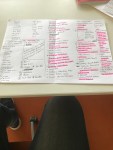 on. While I intend to go into much more detail later on, here are some highlights from the portion I am currently working on. Even though I am a consultant, the team is very interested in my opinion, so I am currently working on a sketch of an interface I think will work and a way to “group” resources for recording purposes. Spending more time with the site, I honestly think that once the extra stuff has been removed (we are customizing an open source option), a good skeleton remains. The big project, of course, is getting everything to function the way it needs to. The majority of my time on this project this week will be on the resources portion, as we try to make it manageable and all-encompassing of offered resources, while trying to keep it from becoming too busy. This is proving to be difficult, as the NTK hosts approximately 80 electronic sources, which doesn’t take into account the physical collection at the library.
 most of the day reading. I have started a new novel, The Walnut Trees of Altenburg, which is throwing a little WWI history my way. I also took on a consultation project for a student. Her research team just got accepted for publication, so I agreed to copy edit their final draft. I have learned I know a lot less about science than I thought and I only got through part of the article today. Stephanie and I then had a discussion about management structures, specifically those that rely on Boards of Directors, and I continued working on the CRM project. I have returned to the world of Post-It notes, and it was actually extremely helpful for my organization.
 leaving early for an excursion. The morning meeting focused on how information is disseminated to high school students that partner with the NTK. My afternoon consisted of exploring the area around Prague Castle(which included Embassy Row), as a cultural experience, before attending an evening lecture by an historian from the U.S. Her presentation on Jewish Escape Networks during WWII in Central and Eastern Europe was extremely interesting, and I hope to look more into her work in the coming weeks. We spoke briefly following the talk, and may be meeting before she leaves the city to continue an historical discussion.
 While I had three meetings today, I did get to largely learning more about Czechia. One of the most useful things about my time here is that Stephanie is trying to feed my interest in history as well, as it will enhance my cultural understanding of the area. I read up on the Austrian-Hungarian Empire, the House of Habsburg (the “junior” line), the fall of the empire and its involvement in WWI, and some of the intricacies of Archduke Franz Ferdinand. While I knew many of the overarching concepts of the empire and this time period, it was nice to see some more specifics, especially some of the beliefs Ferdinand held about the future of the empire. This information was followed by a brief meeting with a CRM team member about our meeting on Friday and the consultation regarding the article I had been copy editing. I left work around 1700 to meet another colleague in the city for drinks. We spent our evening discussing Czechia, her home country of Spain, my home country of the U.S., and just kind of getting to know one another.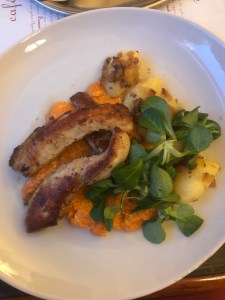
 spend most of my day trying to get a head start on some of the things I know are coming up. With only a 1400 meeting, I knew that most of my day would be self-guided. I was invited to lunch with a colleague I am working on the CRM project with and her office mate. It was quite interesting, as it was the first time I’d been somewhere that they did not have English menus, but the food just reminded me why I love Czech food (it’s delicious!). Apparently today is “The Day of Children,” which is common is this part of Europe. It was nice to discuss how 1 June is a day to celebrate childhood throughout the country (and Slovakia at least). Following lunch, I ended up in another management discussion with Stephanie which showed how complicated changes can get in the library prior to the CRM project team meeting. While not everything got covered in our meeting, I think the brainstorming was very helpful and I am excited to see that they are interested in user input prior to implementing new changes in the interface to hopefully cut down on some reworking that would likely happen otherwise. This just means I have some new mockups to make up and a week to work on consulting with our users prior to our next meeting. I look forward to the challenge following another weekend in the city.
 Raven K