

(NOTE: Title quote is from Dewey, “Libraries as Related to the Educational,” p. 5.)
It still takes my breath away sometimes when I can read the passion someone feels for a subject in their words. Samuel Green and Melvil Dewey are two such characters that have words dripping with passion. While Green’s work seemed to be a pamphlet, Dewey’s call to action was clearly a speech and reading it aloud to myself in my apartment made the words carry so much more weight. Two men of the same era, determined to establish the library at its rightful place among education and the clergy, carved particular strains into their communities to emphasize the importance of free public libraries. While I didn’t agree with all of the things they stood for, as these men were very much products of their time, they instilled the sense of urgency to create this realm of libraries that I believe we still need today. No one may deny the importance of libraries in our culture (well, most people anyway), but we have lost the urgency (aside from the current professionals) to truly make libraries’ evolution a top educational priority.
 Many similar themes flowed through the works of both men, but their close association and connections to similar institutions probably allowed for this. Green’s focus remained on the responsibilities of the librarian though. His examples highlighted the vast knowledge a head librarian should possess, which made me think of the NYC reference librarians of yesteryear that Kristin has mentioned. Though, I suppose they got their start from librarians like Mr. Green. He focused on the guidance a librarian should provide to “wholesome” materials of “rational curiosity” that did not overshadow the “degree of enlightenment” a patron may possess (Green, 77). Librarians, and their helpful female assistants (to encourage patrons with a sense of approachability) had certain responsibilities in their guidance, and Green’s views on what made libraries popular emphasized the proper ways for a librarian to act. Rapport, experience, and friendliness of a librarian coupled with a diverse, accessible collection set libraries apart from one another (Green, 78). These types of behaviors were further reflected in Dewey’s convocation.
Dewey addressed the State of New York to call for action a new type of library, yet he wasn’t really calling for a library, but to strive to create an ideal library through a process (Dewey, 2). His call to action was to consider modernization and played off the pride of New York. He appealed to the historical avenues of New York LEADING to the establishment of new standards in a field he believed they had fallen behind in. If the state waited much longer, he urged, it would again follow in the footsteps of progress, instead of piloting it (Dewey, 16). In order to get his point across, Dewey used metaphor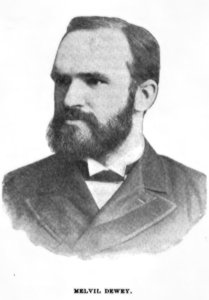 upon metaphor that drew from his vast knowledge, highlighting the prowess of a librarian’s reference abilities and creating a more persuasive argument. Then, he called to the parts of life he knew would pique the interests of his audience the most: school and church. He called for the establishment of a “people’s university” as a way to move past the negative associations of inaccessible libraries of old (Dewey, 8). Stating that the goal of libraries, like that of schools and the church, was to rid the culture of incompetents, he introduced the librarian as a customer service representative that was improving society through their guidance (Dewey, 2).
 Samuel Green and Melvil Dewey are two very prominent figures in library history, but I knew very little about Green, and, therefore, curiosity got the better of me. Upon finishing his article, I did a quick search on him and came up with a plethora of information. Like Dewey, he was involved with the formation of the American Library Association and had ties to the School of Library Economy at Columbia University. While these are expected from a man that shared an important time period with Melvil Dewey, it is the other things he accomplished in the field that struck me. Green is known as the pioneer of libraries being public service oriented. His expansion of library access, from opening the doors on Sunday to establishing an Interlibrary Loan system, led to many of the modern pieces of libraries today. His father founded the Worcester Public Library, which he later ran as Head Librarian from 1871 to 1909. When he retired, the Worcester Public Library created the Samuel Green Resignation Memorial. Just as important as Dewey in the American public library movement, I was actually a bit disappointed that I hadn’t learned more about him previously.

 Raven K
Hah! We both had the same thought about pictures of Dewey & Green and reading Dewey’s speech with our own voices. They both have such authoritative beards and I tried to imagine myself as I spoke his words in a similar position.
I couldn’t help think when Dewey was channeling the ‘Pride of New York’ if he’d been invoking some of the Federalist Papers? The way he speaks toward convincing an audience that this is what is needed, I thought a connection might be made.
I think that is how he differed from Green, in that he wanted a physical change as well as idealism and procedural change, and Green focused more on improvement in public service and personnel. What do you think?
LikeLike
I also had not heard of Green before this week’s readings, and I found his obvious enthusiasm for helping patrons very charming. You’re right, both Green and Dewey wrote with a sense of urgency that came through clearly, and made their writing seem far more contemporary than I’d expected. They advocated for many aspects of libraries I think we take for granted today, and it’s interesting to note that libraries have really always been evolving.
LikeLiked by 1 person
It’s interesting to read what you learned about Green in your extra searching. The commonalities between his viewpoints and Dewey’s were clear in several parts of his essay, so I’m not surprised to find that he was also involved in the founding of the ALA. It’s especially interesting to know that he was a pioneer of service orientation in libraries – that was definitely a huge focus in the essay. I too was surprised to have never learned about Samuel Green before, and I’m glad to have been introduced to him!
LikeLiked by 1 person