

(Title comes from Raganathan’s The Five Laws of Library Science page 247.)
The Second Law of Library Science focuses around the idea that “books are for all” and is postulated as “every person his or her book” (Raganathan, 74-75). Three of the seven chapters of this book are dedicated to this law, which is the only one that has more than one chapter addressing it. Almost half of the book (224 pages) are specifically about this law. Including numerous iterations of “every person his or her book” and repetition of the Second Law, Raganathan reiterates the law 315 times, similar to his repetition of the First Law of Library Science. The chapters on the Second Law of Library Science address the struggle of actually providing books for all, the success of other countries in implementing the Second Law, and the implications India would face in this implementation.
The first chapter on the Second Law addresses the struggle of actually providing books for all. He starts with what he deemed the easiest barrier to break and progresses as he discusses the issues with providing books to different groups of people. From socioeconomic status to location and ability, Raganathan attempts to demonstrate that universal library service is possible while mentioning the struggles that some groups might face. Like the First Law, he speaks of an older law “books are for the chosen few” which must be broken for books to truly be provided to everyone. He also states that changing ideas on who books are meant for is also important, as the critical issue of adult education was being introduced around the world.
The second chapter on the Second Law of Library Science is about the success of this law in other countries around the world. Raganathan calls this digvijaya, which he states means a “world conquering expedition” (Raganathan, 153). The adoption of the Second Law of Library Science is due to the success of the Library Movement throughout the world. Throughout this chapter, he discusses 29 distinct cases, ranging from focusing on single countries to multiple, before addressing India and its place in this expedition. When plausible, Raganathan makes comparisons to India to show that countries in similar situations have been successful in adopting the Second Law of Library Science and have been capable of establishing decent library systems for the public.
The final chapter on the Second Law of Library Science is specifically about what India would need to do to adopt the mantra that “books are for all.” Raganathan divides this chapter into four main themes, discussing the obligations that particular groups have for the success of a library system: the State, the Library Authority, the Reader, and the Staff. Here, Raganathan establishes understandings that are well-developed in the world of library science today and addresses their importance. He attaches the obligation of co-ordination and finance to the State. He holds the Library Authority responsible for the choice of books and staff. He states that Readers are responsible for following the rules as a civic responsibility. Then, he addresses the staff, holding their obligations to reference, bibliography, reference books, and cataloguing. Of course, there are entire courses in library science that revolve on these individual ideas, specifically because “their business is to know the reader” (Raganathan, 291).
In no particular order, the following is a discussion of some things I found interesting throughout the discussion on the Second Law of Library Science:
The Seafarers Education Service (SES) was founded in 1919 by Albert Mansbridge to help educate men at sea. Mansbridge was an English educator known for his pioneering activities in British adult education, and is most known for founding the Worker’s Educational Association in 1903. Through the SES library service was established for men at sea which continues to this day. The College of the Sea grew from these services in 1938, as did the Sea War Library Service that provided books to ally ships during World War II (Kent, Lancour, and Daily, 455). Today, the SES is part of the Marine Society, which was founded in 1756 to provide skilled crews for ships in Great Britain. It refocused its efforts after the war to help support those who chose sea careers following a change in naval training. In 1976, their mission shifted again when they merged with SES to provide education services to seafarers.
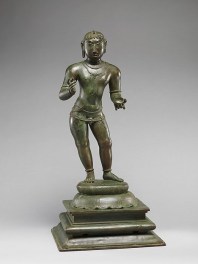 Raganathan explains the universality of the Second Law of Library Science by connecting to Indian saint Sambandar. He explains that this child saint, known for his dedication to writing hymns to the gods due to the gifts bestowed on him, embodied the idea of universal brotherhood in his final worldly act. Upon wedding his wife, he was presented with the gates of heaven. Instead of taking his place immediately, he gathered all from his place, with no regard to the differences between them, and let them all pass to the heavens. Then, he took his place. By connecting to this Indian myth, he reinforced the ideas of the Second Law to his audience, by connecting with their beliefs and understandings of the world.
In discussing the types of reference that staff members should be able to assist readers with, feminism is brought up. Particularly, Raganathan states that a senior preparing a debate about feminism should be able to be helped by library staff. This caught my eye due to the uncommon reference to feminism at this time period. Keeping in mind that Raganathan’s experience in the libraries come from the United Kingdom, the political tides of this time period may have brought this example to him. In 1929, from efforts in the British women’s movement and the developments in garnering the right to vote, Margaret Bondfield was the first woman elected as a cabinet minister. Such instances would make feminism debates possible in British school systems, and, possibly, Raganathan’s examples are pulled from his experiences in the library system.
In his original drawing out of the importance of the Second Law, Raganathan mentions the development of a library school in Moscow around 1913. He goes on to quote a national article that could not understand such a development in Russia “which would pave a way for a revolution” (Raganathan, 81). I was incapable of tracking down the source that he referenced, mostly due to the lack of citation standards in this time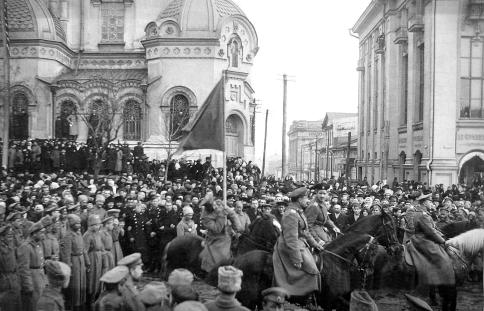 period which doesn’t provide sufficient information to tracking down all sources. Still, I found this revelation interesting, as a revolution of course followed in Russia just four years later. Although it is extremely unlikely that this particular library school had much influence on the Bolshevik Revolution in 1917, the discussion of Soviet Russia in the second chapter on the Second Law of Library Science highlights the importance of libraries in the communist country. They dedicated themselves to ridding the country of illiteracy and established culture centers in many villages, towns, and cities that function as libraries, community centers, and propaganda machines for the Soviet Regime.
Even in 1931, the influence of libraries in Michigan had the prominence to catch the eyes of well-known librarians the world over. While I’m pretty sure there was a specific reference to Michigan in the chapter regarding the First Law of Library Science, two references in the implications chapter on the Second Law of Library Science caught my eye. In discussing the pitfalls of financial insecurity to fund libraries, Raganathan points to an approach established for such funding that is addressed in the Michigan Constitutional drafts that preceded its 1837 statehood. In 1835, the Michigan Constitution developed the idea that crime should fund libraries, as a better educated public would commit far less crime (Raganathan, 254). Therefore, all funds that were garnered through the court systems that did not have other allocations went into the state’s library systems. A Michigan Municipal League document from November 2007 provides tables that indicate fines are still allocated to libraries. The second reference specifies Detroit Public Libraries. Here, Raganathan briefly describes the development of advocating for “purposeful reading,” an idea he held as an obligation for library staff (Raganathan, 292).
In the reading, I found two clear themes emerge that may indicate the importance that Raganathan attached to this law: Andrew Carnegie and India itself. I briefly address both next.
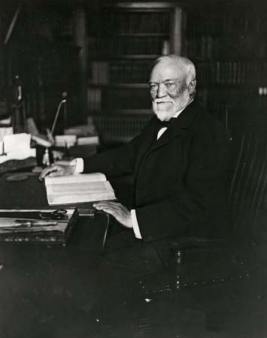 Because of the influences Raganathan was under, Andrew Carnegie and his generosity through the Carnegie Foundation was extremely prevalent. In fact, there was an entire section in the chapter regarding the domination of libraries on Carnegie himself. On more than one occasion, he dreams of such a benefactor for the Indian library system, and places the success of American, both North and South, and the British systems largely on the efforts of Andrew Carnegie. He does not go into the complexities of the man himself, and seems to only place understanding of what the money his foundation provides as the only thing that needs to be understood to hold him in such high esteem.
The Second Law of Library Science is such a focus in this book because this is the law Raganathan thinks is the one that India was then struggling with. This book is clearly a handbook for the success of libraries in India, whether with the help of their British government or not. Such dedication of time to this particular law continuously points back to the needs that India has and the things they could be adopting to further their cause.

 Raven K
This is fascinating stuff! While I expected reading this almost century-old dense book would be dull and dry to me, I really am enjoying reading your interpretations. I’m especially interested in the varied milieu of historical context you have researched. I was surprised like you to read that Ranganathan mention’s the study of feminism, but it does become a bit more understandable looking at the historical context of the women’s movement in Britain as you mention. Additionally, I was not aware that such attention was paid to developing libraries in seafaring environments. Finally, it’s exciting to see that he mentions my home state (and our school’s state) on multiple occasions! I wasn’t aware that that funds were allocated from the courts to libraries, and it’s especially intriguing to note that this practice continues to this day.
LikeLiked by 1 person